0DTE Vs Swing Trading Options Trading Strategy | 0DTE Guide
Master the 0DTE Vs Swing Trading 0DTE trading strategy. Learn risk management, setups, and maximize your win rate today with our comprehensive guide.
0DTE vs Swing Trading
Compare 0DTE day trading with swing trading approaches. Which style suits your personality, schedule, and account size?
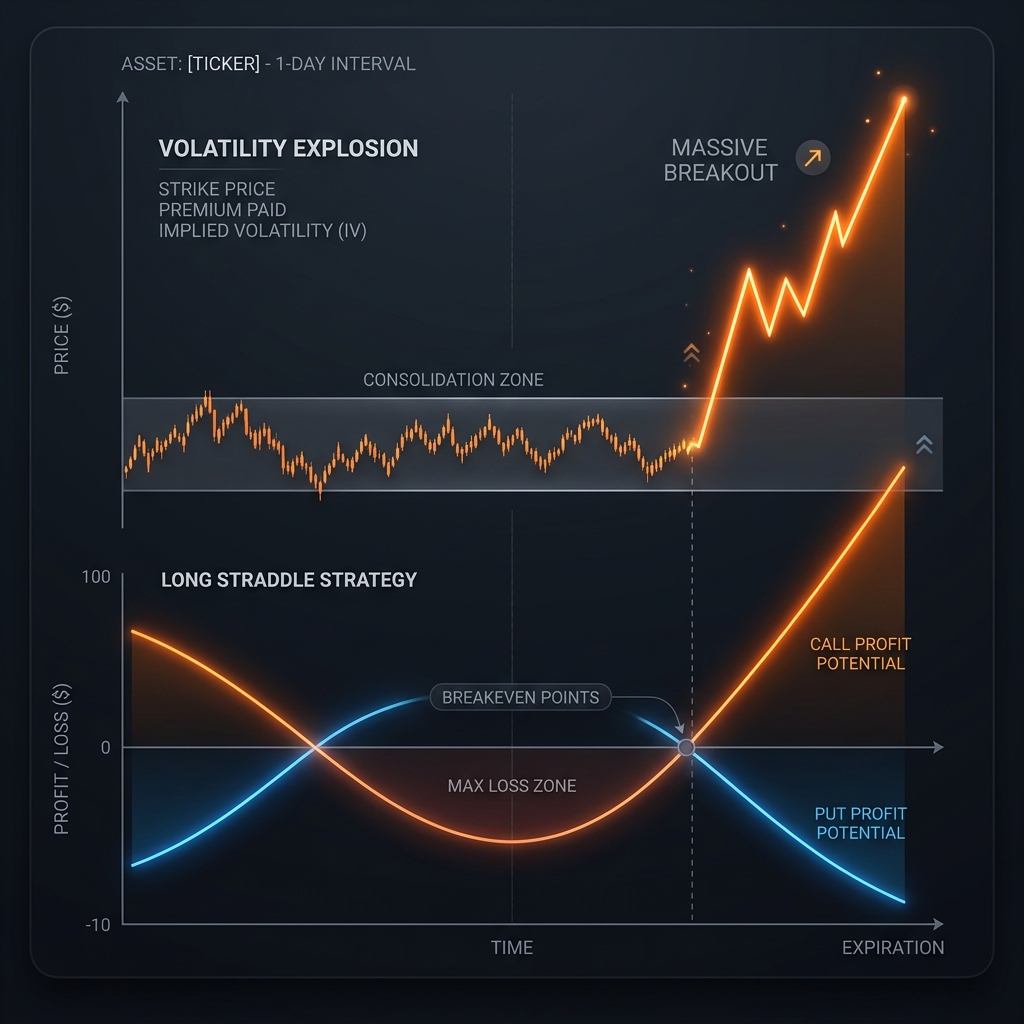
Whether you’re new to zero-days-to-expiration or scaling an existing approach, understanding the fundamentals of trading 0DTE options is essential before you trade live capital. This guide covers.
The Fundamental Difference
0DTE trading is intraday — all positions open and close the same day. Swing trading holds positions for days, weeks, or even months.
Style Comparison
0DTE Trading
- Time commitment: 2-6 hours per day actively monitoring
- Overnight risk: None
- Capital efficiency: High — capital is freed daily
- Stress level: Higher — fast decisions required
- Tax treatment: Short-term capital gains (ordinary income rates)
- Learning curve: Steep — requires options knowledge
Swing Trading
- Time commitment: 30 minutes per day for analysis
- Overnight risk: Yes — gaps can work for or against you
- Capital efficiency: Lower — capital is tied up
- Stress level: Lower — more time to think
- Tax treatment: Can qualify for long-term capital gains
- Learning curve: Moderate — technical analysis focused
Which Is Better?
Neither is inherently better. It depends on:
- Your schedule: Can you watch a screen during market hours?
- Your temperament: Do you prefer quick action or patient waiting?
- Your account size: Smaller accounts may benefit from 0DTE’s capital efficiency
- Your goals: Daily income vs. capturing larger moves
Can You Do Both?
Absolutely. Many traders use 0DTE for daily income and swing trading for longer-term positions. The key is having separate accounts or clear mental accounting for each approach.
To further refine your strategy, consider comparing this approach with the 0DTE Margin Requirements or exploring the mechanics behind 0DTE Options Greeks Explained. Everything ties back into the foundational concepts available in our Education Hub.
For real-time confirmation of these structures, many professional traders use the 01DTE dashboard to track institutional positioning.
Ready to Master vs Swing Trading?
Stop guessing and start executing with precision. Join our community of professional traders and get access to real-time gamma levels, flow analysis, and institutional-grade trading tools.
Start Trading NowFrequently Asked Questions
What is 0DTE Vs Swing Trading in the context of 0DTE trading?
Yes, understanding 0DTE Vs Swing Trading is critical for day traders. It refers to the specific methodology of managing zero days to expiration positions by leveraging intraday volatility. Traders use this approach to capture rapid premium decay while strictly defining their risk parameters. By utilizing this strategy correctly, you can optimize your entry and exit points throughout the trading session without holding overnight risk.
How does 0DTE Vs Swing Trading impact risk management?
The primary risk when using 0DTE Vs Swing Trading involves sudden intraday market reversals (gamma risk). Because 0DTE options expire the same day, any adverse movement in the underlying asset can result in rapid, exponential losses if left unmanaged. Strict stop losses, position sizing limits (risking no more than 1% to 2% of account capital), and automated risk controls are absolutely essential to survive over the long term.
Is 0DTE Vs Swing Trading suitable for beginner traders?
No, beginners should exercise extreme caution. 0DTE Vs Swing Trading requires a deep understanding of options pricing models, Greek dynamics (especially Gamma and Theta), and order execution speed. Novice traders should spend several months paper trading and backtesting their approach before risking live capital, as the emotional and financial swings associated with this strategy can be overwhelming without prior experience.
What is the best time of day to execute 0DTE Vs Swing Trading?
Execution timing depends heavily on the specific setup, but many professional traders prefer to enter 0DTE Vs Swing Trading trades during the mid-morning session (around 10:30 AM to 11:30 AM EST) after the initial opening volatility has subsided. Others wait for the final two hours of the day (2:00 PM to 4:00 PM EST) to capture the most aggressive phase of theta decay, though this carries elevated directional risk.
Which brokers are best for trading 0DTE Vs Swing Trading?
For executing 0DTE Vs Swing Trading, you need a broker with direct market access, lightning-fast execution, and favorable commission structures. Interactive Brokers, Tastytrade, and ThinkOrSwim (Charles Schwab) are highly recommended by professionals. These platforms offer robust API integrations, advanced charting tools, and the necessary options permissions (Level 2 or higher) required to trade complex intraday strategies effectively.
Disclaimer: This content is for educational purposes only. Not financial advice. Options trading involves substantial risk. Consult a licensed financial advisor before trading. Full disclaimer
Related Articles
0DTE Vs 1dte Options Trading Strategy | 0DTE Guide
Compare 0DTE and 1DTE options trading. Key differences in risk, reward, theta decay, and strategy selection between same-day and next-day expiration.
0DTE Credit Spread Options Trading Strategy | 0DTE Guide
Master the 0DTE Credit Spread 0DTE trading strategy. Learn risk management, setups, and maximize your win rate today with our comprehensive guide.
0DTE Covered Call Options Trading Strategy | 0DTE Guide
Master the 0DTE covered call — own shares and sell calls for daily income. A conservative strategy for generating returns from existing positions.
0DTE Cash Secured Put Options Trading Strategy | 0DTE Guide
Master the 0DTE Cash Secured Put 0DTE trading strategy. Learn risk management, setups, and maximize your win rate today with our comprehensive guide.
What is 0DTE Trading? The Complete Beginner's Guide
Everything you need to know about 0DTE (Zero Days to Expiration) options trading. Learn the mechanics, the risks, and the strategies used by professionals.