0DTE Iron Condor Options Trading Strategy | 0DTE Guide
Master the 0DTE Iron Condor with our comprehensive 0DTE options trading strategy guide. Learn risk management, optimal setups, and maximize your win rate today.
Capital Required: $2,000-$10,000
0DTE Iron Condor Strategy for Futures
The definitive, comprehensive guide to mastering the 0DTE iron condor on ES and NQ futures. Discover institutional entry rules, structural market analysis, advanced adjustment techniques, and risk management.
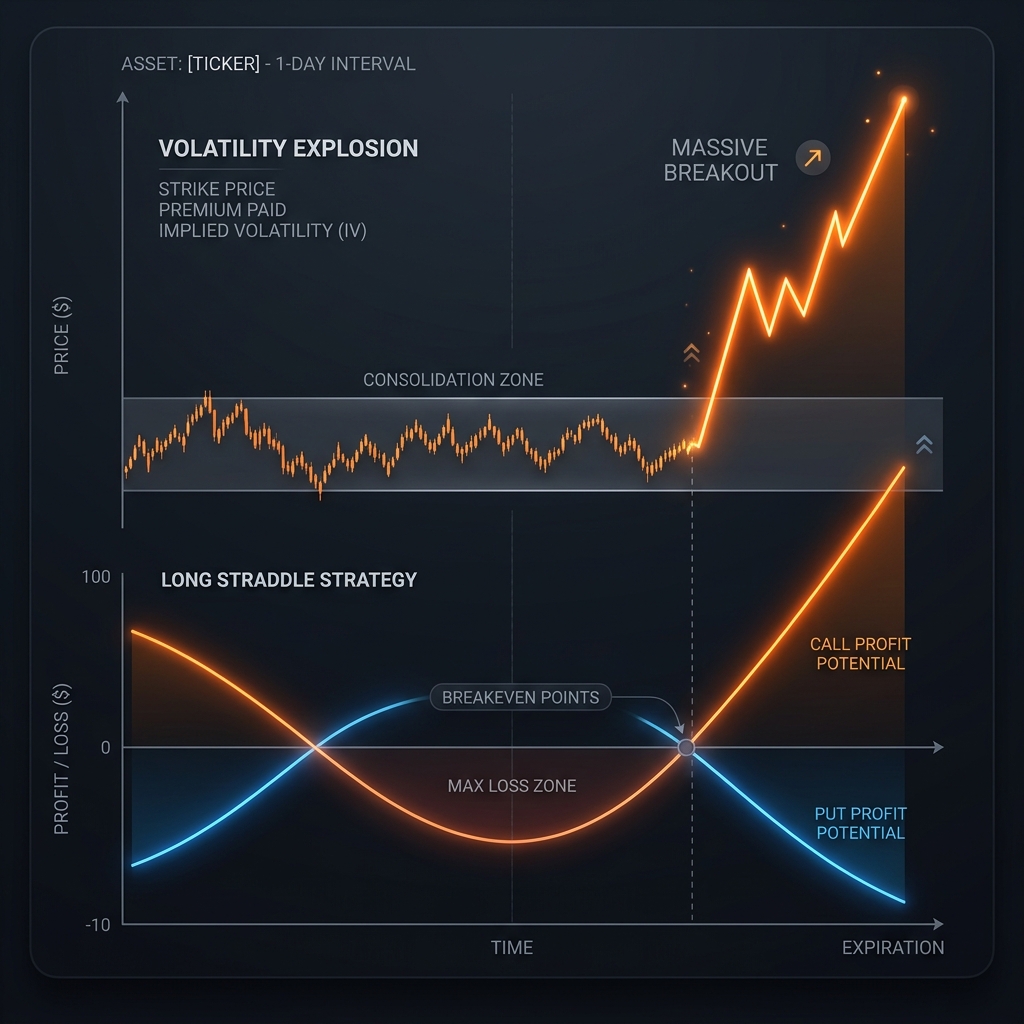
Whether you’re new to zero-days-to-expiration or scaling an existing approach, understanding the fundamentals of zero days to expiration trading is essential before you trade live capital. This guide covers.
The Definitive Guide to the 0DTE Iron Condor on Futures
The 0DTE Iron Condor is arguably the most popular and heavily traded non-directional strategy in the derivatives market. Executed daily on the S&P 500 (via SPX options or ES futures options), it is a precision financial instrument designed to systematically harvest rapid time decay (theta) on days when the market exhibits range-bound or mean-reverting behavior.
In this exhaustive, master-level guide, we will break down absolutely everything you need to know about trading 0DTE Iron Condors in the modern futures market. We will cover the structural mechanics of the trade, delta selection, severe gamma risk management, volatility regimes, dynamic in-trade adjustments, portfolio allocation, and psychological discipline. Whether you are trading Micro E-mini (MES) options to learn the ropes or scaling up to standard E-mini (ES) contracts for professional income, this guide will serve as your ultimate foundational playbook.
Part 1: Deconstructing the Iron Condor Structure
At its core, an Iron Condor is a four-legged options strategy that consists of two distinct credit spreads: a Bull Put Spread (to define the lower safety boundary) and a Bear Call Spread (to define the upper safety boundary).
By selling out-of-the-money (OTM) options on both sides of the underlying asset’s current price, you create what traders refer to as a “profit tent.” As long as the ES or SPX settles anywhere between your short strikes at the precise moment of expiration (4:00 PM EST), you capture the maximum profit—which is the total net premium collected upfront when you routed the order.
The Four Legs of the Strategy Explained
To successfully construct and route an Iron Condor, you simultaneously execute the following four transactions in the same expiration cycle:
- Sell to Open 1 OTM Call (The Short Call - Generates upside credit)
- Buy to Open 1 Further OTM Call (The Long Call - Acts as a hard cap on upside risk)
- Sell to Open 1 OTM Put (The Short Put - Generates downside credit)
- Buy to Open 1 Further OTM Put (The Long Put - Acts as a hard cap on downside risk)
Because you are selling options closer to the money (where premiums are more expensive) and buying options further out of the money (where premiums are dramatically cheaper), the strategy inherently results in a net credit deposited to your account balance immediately upon fill.
Iron Condor Payoff Diagram (Short strikes at $4050 and $4100)
The Mathematical Profile of the Trade
Understanding the math before risking capital is non-negotiable. The payoff diagram highlights the exact zones of profit and loss.
- Maximum Profit: The total net credit received when opening the trade. This occurs if, and only if, the underlying price closes strictly between your short put and short call.
- Maximum Loss: The width of the widest spread (the distance between your short and long strikes) minus the total net credit collected. Because both sides of the Iron Condor cannot be breached simultaneously (the market cannot mathematically be above your call and below your put at the exact same time), your broker calculates the margin requirement based only on the risk of one side of the spread.
- Upside Breakeven: Short Call Strike + Net Credit Received.
- Downside Breakeven: Short Put Strike - Net Credit Received.
Part 2: Why Trade Iron Condors on 0DTE Futures?
The explosion of 0DTE (Zero Days to Expiration) liquidity has completely transformed the ES futures and SPX options markets over the last few years. Volumes have skyrocketed, spreads have tightened to pennies, and institutional adoption has validated the space. But why has the Iron Condor become the specific weapon of choice for intraday premium sellers?
1. The Power of Exponential Theta Decay
An option’s price consists of two main components: intrinsic value and extrinsic (time) value. Theta is the Greek metric that measures exactly how much value an option loses as each day passes. For standard 30-DTE options, theta decay is a slow, gradual bleed. However, for 0DTE options, theta decay is not linear—it is aggressively exponential. An OTM option with a $1.00 premium at 10:00 AM might decay to $0.10 by 2:00 PM simply because the clock is ticking, even if the underlying asset hasn’t moved a single point. The Iron Condor is specifically architected to be a pure, isolated play on this rapid theta decay.
2. Structurally Defined Risk in a High-Variance World
Selling naked options (like strangles or straddles) is a popular way to collect premium, but it exposes traders to infinite upside risk and massive downside risk. The Iron Condor structurally caps your worst-case scenario. If a sudden, unforeseen geopolitical news event hits the wires at 1:00 PM and causes a 100-point spike in ES futures, your long call instantly kicks in to arrest your losses at a predetermined level. In the high-velocity, algorithm-dominated world of 0DTE, having a mathematically defined max loss is non-negotiable for long-term account survival.
3. Absolute Market Neutrality
Predicting intraday direction consistently is notoriously difficult, if not impossible, for retail traders. The good news? The market spends approximately 70% of its time in consolidating, choppy, or mean-reverting ranges. The Iron Condor doesn’t require you to possess a crystal ball to guess if the market will close green or red; it only requires you to intelligently predict where the market won’t go. This expands your margin for error dramatically compared to buying outright calls or puts.
4. Capital Efficiency via SPAN Margin Systems
Trading 0DTE Iron Condors on ES futures options (often denoted as FOPs) requires significantly less buying power than trading equivalent SPX options in a standard Reg T margin account. Futures brokers utilize SPAN (Standard Portfolio Analysis of Risk) margin frameworks, which calculate risk based on the overall portfolio’s worst-case scenario rather than rigid absolute rules. This allows traders with smaller accounts to deploy advanced strategies and achieve a significantly better Return on Capital (ROC) without overleveraging.
Part 3: Market Context and Regime Identification
The single most common reason novice traders blow up their accounts trading Iron Condors is that they attempt to trade the exact same strategy every single day, regardless of what the market is doing. The strategy’s success depends almost entirely on accurately identifying the current market regime. You must learn to differentiate between a “trend day” (fatal for Iron Condors) and a “range day” (highly profitable).
Analyzing Volatility Environments (VIX and VIX1D)
Before even considering routing an Iron Condor order, you must check the VIX (the 30-day expected volatility index) and VIX1D (the 1-day expected volatility index).
- Low VIX Environments (Under 14): Premiums are cheap. In order to collect an adequate credit, you will be forced to place your short strikes uncomfortably close to the current market price. This drastically increases the mathematical probability of a breach. Iron Condors in low VIX environments feel safe, but they are often traps.
- High VIX Environments (Over 20): Premiums are extremely rich. You can place your short strikes hundreds of points away from the current price and still collect a massive credit. However, high VIX implies high actual realized volatility—meaning the market is highly capable of massive, violent intraday swings that can easily slice right through your incredibly wide wings.
- The Institutional Sweet Spot: Many professional premium sellers prefer a VIX reading between 15 and 19 for Iron Condors. In this zone, the premiums are adequate to justify the risk, but the intraday ranges are typically manageable and exhibit healthy mean-reversion.
Gamma Exposure (GEX) and Dealer Positioning
In modern 0DTE futures trading, understanding Gamma Exposure is your ultimate, institutional-grade edge. Market makers (dealers) who sell options to retail traders must constantly hedge their books to remain delta-neutral, and they do this by buying or selling the underlying ES futures.
- Positive Gamma Regimes: When dealers are aggregate long gamma, their hedging algorithms force them to sell into market rallies and buy into market dips. This creates heavy, artificial intraday support and resistance, suppressing overall volatility and trapping the market in tight ranges. This is the absolute ideal environment for Iron Condors.
- Negative Gamma Regimes: When dealers are aggregate short gamma, they are forced to sell into market weakness and buy into market strength. This creates a feedback loop that amplifies directional moves, leading to massive, face-ripping trend days. You must avoid Iron Condors in negative gamma environments at all costs. Stick to directional credit spreads or long options on these days.
Navigating Catalyst Days vs. Dead Days
Never, under any circumstances, open a 0DTE Iron Condor blindly on a morning when tier-1 macroeconomic data is scheduled for release. Days featuring CPI data, Non-Farm Payrolls (NFP), Federal Reserve FOMC announcements, or highly anticipated speeches by the Fed Chair usually trigger severe, rapid directional repricing in the futures market. Reserve your heavy Iron Condor sizing for “dead” days—such as typical Tuesdays and Thursdays in the middle of earnings season with empty economic calendars.
Part 4: Step-by-Step Entry Protocol
Success in 0DTE trading requires a robotic, systematic, and entirely emotionless approach to execution. Below is a professional-grade entry protocol for the ES futures Iron Condor. Print this out and keep it next to your trading terminal.
Time of Day (The Waiting Game)
Never enter an Iron Condor at the 9:30 AM EST cash equities open. The first 30 to 45 minutes of trading are chaotic, dominated by the unwinding of overnight order imbalances and aggressive algorithmic positioning. Let the market establish its Initial Balance (the high and low of the first hour). The optimal entry time is generally between 10:15 AM and 11:00 AM EST, once the daily structure has formed and implied volatility has experienced its initial morning crush.
Delta Selection (Setting the Trap)
The strike selection dictates your historical win rate. Professional premium sellers typically target the 10 to 15 Delta for their short strikes. A 10 Delta put suggests roughly a 90% statistical probability that the option will expire out-of-the-money. By setting both wings at 10 Delta, you give the market a massive playground to move around in without threatening your short positions. Never compromise and sell 25 Delta strikes just to chase a higher credit.
Wing Width and Credit Assessment
Buy your long protection legs 5 to 10 points further out from your short strikes. For a 5-point wide spread on ES/SPX, you must ensure the total credit collected justifies the risk. A standard institutional rule of thumb is to collect at least 15% to 20% of the spread width. Therefore, for a 5-wide condor ($500 maximum risk per contract), you should target $0.75 to $1.20 in total credit ($75 to $120). If the market is only offering $0.40, the risk/reward math is broken and you must skip the trade.
Technical Overlay and Price Action Confirmation
Never blindly sell strikes strictly because they fit the delta profile. You must overlay your selected strikes on a charting platform. If your short call is sitting at 4100, ensure there is a major technical resistance level, a volume profile node, or a heavy Gamma Wall below 4100 to act as a buffer. If the technical chart contradicts the options pricing model, the chart usually wins. Trust the price action.
Part 5: Managing the Trade — Exits, Stops, and Adjustments
Finding an entry is easy; managing the risk is where traders earn their keep. Entering the trade is only 20% of the battle. The hallmark of a professional 0DTE futures trader is how rigorously they manage the position once it is live.
0DTE options possess intense, violent Gamma Risk—meaning the delta (the directional exposure) of your options will change exponentially as the underlying price moves closer toward your short strikes late in the day. A trade that is comfortably profitable at 2:00 PM can become a maximum loss by 2:15 PM if gamma catches you off guard.
The “Set a Profit Target” Rule
You should rarely, if ever, attempt to hold a 0DTE Iron Condor completely into the final 15 minutes of the session just to extract the last few pennies of premium. As expiration rapidly approaches, the gamma squeeze potential is immense. A sudden 15-point spike in ES futures can turn a beautiful winning trade into a devastating maximum loss in a matter of seconds.
- Best Practice: The moment your order is filled, immediately place a Good-Til-Canceled (GTC) limit order to buy back the entire Iron Condor at 50% to 75% of your initial credit. If you collected $1.00 upfront, let your platform automatically close the trade when the price hits $0.50. Locking in reliable, base-hit profits and removing risk from the table is the absolute secret to longevity in this business.
Strict Stop Loss Protocols
Because the mathematical maximum loss on an Iron Condor is typically 3x to 5x larger than the maximum profit, taking a single maximum loss can easily wipe out an entire week of successful trading. This is why hard stops are mandatory.
- Premium-Based Stop: Close the entire position immediately if the total cost to buy back the Iron Condor inflates to 2x to 3x the initial credit received. If you collected $1.00 to open the trade, you must execute a market or limit order to exit for a loss when the price of the spread hits $2.50 or $3.00. Never sit on your hands and hope for a reversal. Hope is not a trading strategy.
Advanced Adjustments: To Roll or Not to Roll?
When the market begins to trend aggressively and threatens to breach one of your short strikes, you face a critical decision: take the predetermined stop loss, or attempt to adjust the trade. Adjustments in 0DTE are incredibly difficult and highly stressful due to the extreme lack of time for the trade to work out, but one common professional technique is the “Iron Butterfly Roll”.
Imagine a scenario where your Call side is being threatened by a relentless, grinding afternoon rally. The Put side of your Iron Condor, meanwhile, is now virtually worthless (it is showing maximum profit because the market has moved so far away from it). To adjust, you can:
- Buy back the highly profitable Put spread for pennies to lock in that side’s gain.
- Sell a brand new Put spread much closer to the current market price, collecting a fresh, substantial credit.
- This extra credit received physically pushes your overall upside breakeven point higher, giving your threatened Call side much-needed breathing room. Warning: This dynamic adjustment narrows your profit tent significantly and essentially morphs the position into an Iron Butterfly. If the market suddenly reverses and crashes, your new, closer Put spread will suddenly be under severe attack. Adjustments add risk and complexity.
Part 6: Position Sizing and Capital Allocation
The cold, hard math of the Iron Condor demands total mathematical discipline. Because it is a high-probability but negative risk/reward strategy (meaning you might risk $400 to make $100), poor position sizing will inevitably lead to account ruin, no matter how good your entry criteria are.
The 1% to 2% Rule
You should never risk more than 1% to 2% of your total net liquidation value on a single 0DTE Iron Condor trade.
- If you are managing a $50,000 account, your maximum total risk for any given trade should be capped at $500 to $1,000.
- If you are trading 5-point wide spreads on ES futures (where the max risk is approximately $400 per contract), a $50,000 account should trade no more than 1 or 2 contracts at a time. It may feel frustratingly slow, but it guarantees survival.
The Psychological Illusion of “Free Money”
The incredibly high 80-85% win rate of the Iron Condor often creates a very dangerous psychological trap for new traders. A trader will execute the strategy and win 15 trades in a row, building immense, unearned confidence. Believing they have discovered a “free money glitch” in the market, they will drastically increase their position size (for example, risking 20% or 30% of their account on a single day).
When the inevitable, mathematically certain 3-sigma trend day finally occurs and violently slices through their Iron Condor, the massively oversized loss decimates their portfolio, wiping out months of hard work in a single afternoon. You must treat the Iron Condor like an insurance underwriting business. You collect small, highly probable premiums daily, but you must keep your total liabilities strictly capped, heavily diversified, and perfectly sized to survive the worst-case scenario.
Part 7: The Final Hour (Power Hour) Dynamics
The structural behavior of 0DTE options completely shifts between 3:00 PM and 4:00 PM EST. This high-octane 60-minute window is affectionately and fearfully known by institutional traders as “Power Hour.”
During this precise time window, options become hyper-sensitive to microscopic price movements. This is peak Gamma. A 10-point move in ES futures at 11:00 AM might barely alter the pricing of your 10-Delta Iron Condor. The exact same 10-point move occurring at 3:45 PM can cause the price of your options to explode by 500% in a flash.
If your short strikes are anywhere near the current market price when the clock strikes 3:00 PM, you must close the trade. The gamma risk during this hour is highly asymmetric and heavily skewed against the premium seller. Furthermore, large institutional funds frequently execute massive Market-On-Close (MOC) orders in the final 15 minutes of the day to balance their portfolios. These multi-billion-dollar block orders cause violent, totally unpredictable directional swings that do not respect any form of technical support or resistance levels. Protect your capital by being flat and in cash before the closing bell chaos begins.
Part 8: Summary of the Professional Edge
To succeed with the 0DTE Iron Condor on futures over a multi-year timeframe, you must actively elevate your approach from that of a retail gambler to an institutional risk manager. Remember these core tenets:
- Trade the Market Regime: Only deploy the strategy in verified positive gamma, low-catalyst, mean-reverting environments. If the VIX is spiking and dealers are short gamma, stay away.
- Respect the Mathematical Probabilities: Stick strictly to the 10-15 delta strikes and ensure you collect adequate credit (aiming for 15-20% of the spread width). Do not force bad setups.
- Automate Your Exits: Use hard limit orders to take profits consistently at 50-75% of max profit, and adhere to strict stop losses at 2.5x the credit received.
- Size Appropriately: Never risk more than 1% to 2% of your total account equity on any single daily expiration.
- Avoid the Last Hour Gamma Trap: Close all at-risk positions before gamma velocity reaches its absolute peak in the final 45 minutes of the session.
By internalizing and adhering to these strict rules, the Iron Condor transforms from a dangerous, coin-flip gamble into a highly consistent, robust, and professional engine for generating daily cash flow in the futures derivatives market.
To further refine your strategy, consider comparing this approach with the 0DTE Covered Call or exploring the mechanics behind 0DTE Credit Spread Strategy. Everything ties back into the foundational concepts available in our 0DTE Strategies Hub.
For real-time confirmation of these structures, many professional traders use the 01DTE dashboard to track institutional positioning.
Ready to Master 0DTE Futures?
Stop guessing and start executing with precision. Join our community of professional traders and get access to real-time gamma levels, flow analysis, and institutional-grade trading tools.
Start Trading NowFrequently Asked Questions
What is 0DTE Iron Condor in the context of 0DTE trading?
Yes, understanding 0DTE Iron Condor is critical for day traders. It refers to the specific methodology of managing zero days to expiration positions by leveraging intraday volatility. Traders use this approach to capture rapid premium decay while strictly defining their risk parameters. By utilizing this strategy correctly, you can optimize your entry and exit points throughout the trading session without holding overnight risk.
How does 0DTE Iron Condor impact risk management?
The primary risk when using 0DTE Iron Condor involves sudden intraday market reversals (gamma risk). Because 0DTE options expire the same day, any adverse movement in the underlying asset can result in rapid, exponential losses if left unmanaged. Strict stop losses, position sizing limits (risking no more than 1% to 2% of account capital), and automated risk controls are absolutely essential to survive over the long term.
Is 0DTE Iron Condor suitable for beginner traders?
No, beginners should exercise extreme caution. 0DTE Iron Condor requires a deep understanding of options pricing models, Greek dynamics (especially Gamma and Theta), and order execution speed. Novice traders should spend several months paper trading and backtesting their approach before risking live capital, as the emotional and financial swings associated with this strategy can be overwhelming without prior experience.
What is the best time of day to execute 0DTE Iron Condor?
Execution timing depends heavily on the specific setup, but many professional traders prefer to enter 0DTE Iron Condor trades during the mid-morning session (around 10:30 AM to 11:30 AM EST) after the initial opening volatility has subsided. Others wait for the final two hours of the day (2:00 PM to 4:00 PM EST) to capture the most aggressive phase of theta decay, though this carries elevated directional risk.
Which brokers are best for trading 0DTE Iron Condor?
For executing 0DTE Iron Condor, you need a broker with direct market access, lightning-fast execution, and favorable commission structures. Interactive Brokers, Tastytrade, and ThinkOrSwim (Charles Schwab) are highly recommended by professionals. These platforms offer robust API integrations, advanced charting tools, and the necessary options permissions (Level 2 or higher) required to trade complex intraday strategies effectively.
Disclaimer: This content is for educational purposes only. Not financial advice. Options trading involves substantial risk. Consult a licensed financial advisor before trading. Full disclaimer
Related Articles
0DTE Credit Spread Options Trading Strategy | 0DTE Guide
Master the 0DTE Credit Spread 0DTE trading strategy. Learn risk management, setups, and maximize your win rate today with our comprehensive guide.
0DTE Covered Call Options Trading Strategy | 0DTE Guide
Master the 0DTE covered call — own shares and sell calls for daily income. A conservative strategy for generating returns from existing positions.
0DTE Iron Butterfly Options Trading Strategy | 0DTE Guide
Master the iron butterfly 0dte strategy. Learn how to maximize income, manage gamma risk, and execute the 0dte spx iron butterfly strategy effectively.
0DTE Cash Secured Put Options Trading Strategy | 0DTE Guide
Master the 0DTE Cash Secured Put 0DTE trading strategy. Learn risk management, setups, and maximize your win rate today with our comprehensive guide.
0DTE Calendar Spread Options Trading Strategy | 0DTE Guide
Master the 0DTE Calendar Spread 0DTE trading strategy. Learn risk management, setups, and maximize your win rate today with our comprehensive guide.