0DTE Iron Butterfly Options Trading Strategy | 0DTE Guide
Master the iron butterfly 0dte strategy. Learn how to maximize income, manage gamma risk, and execute the 0dte spx iron butterfly strategy effectively.
Capital Required: $2,000-$10,000
0DTE Iron Butterfly Strategy: The Ultimate Guide
Master the iron butterfly 0dte strategy. Learn how to maximize income, manage gamma risk, and execute the 0dte spx iron butterfly strategy effectively.
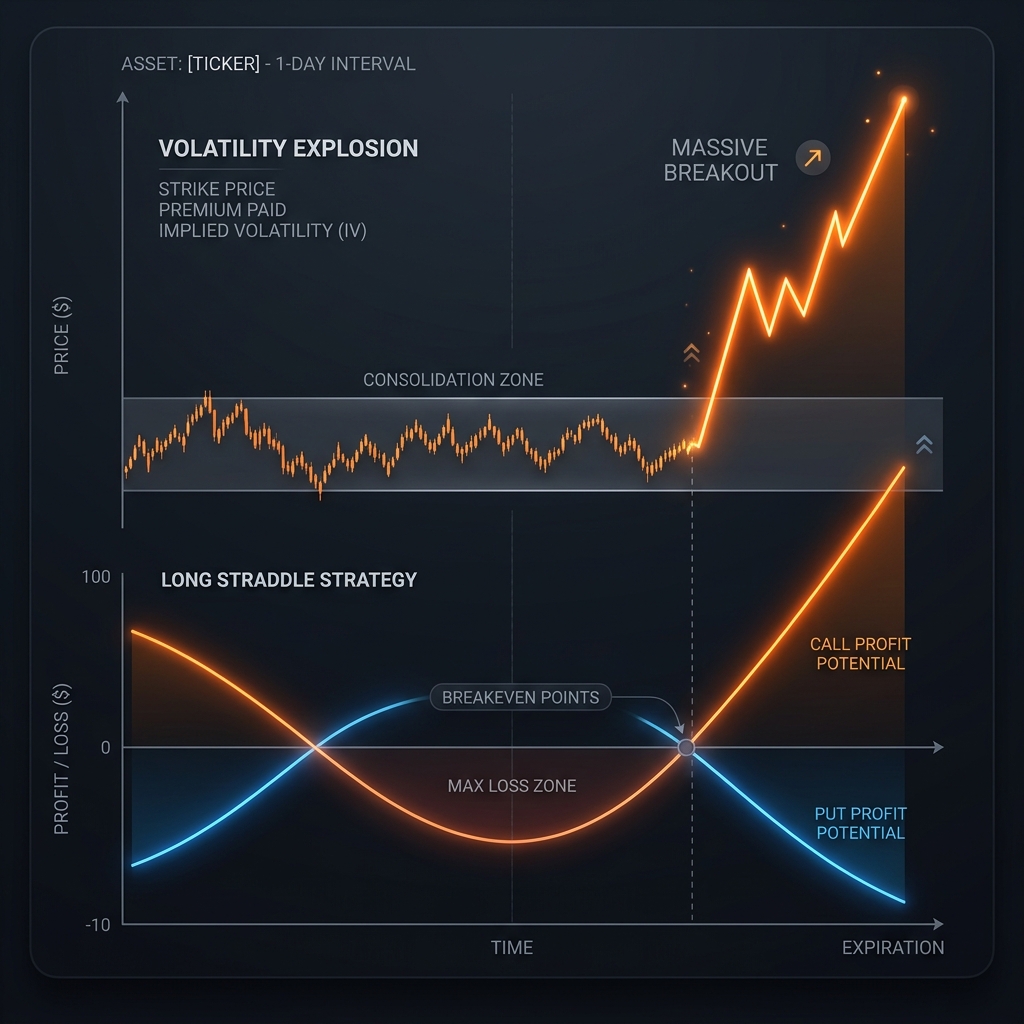
Whether you’re new to zero-days-to-expiration or scaling an existing approach, understanding the fundamentals of 0DTE options trading strategy is essential before you trade live capital. This guide covers.
Introduction: The Power of the Iron Butterfly 0DTE Strategy
If you’re trading zero days to expiration options, you are constantly searching for an edge in premium collection. The iron butterfly 0dte strategy is a favorite among professional derivatives traders because it sits at the absolute peak of premium harvesting. By selling an at-the-money (ATM) straddle and buying out-of-the-money (OTM) wings for protection, you position yourself to capture the maximum possible time decay (theta) in the market.
However, high reward comes with a razor-thin margin for error. The 0dte spx iron butterfly strategy requires surgical precision, deep understanding of market microstructure, and strict risk management rules. In this comprehensive guide, we will get the iron butterfly explained from top to bottom, walk through a real-world iron butterfly example, and show you how to leverage advanced analytics to pinpoint the perfect entry.
Iron Butterfly Explained: What Is It?
An Iron Butterfly is an advanced, high-premium, defined-risk neutral options strategy. It is constructed by executing four option legs simultaneously. Think of it as a naked short straddle that has been wrapped in long options to prevent a catastrophic blowout if the market trends hard.
The Anatomy of an Iron Butterfly
To construct this strategy, you must execute four legs simultaneously. Here is the exact structure:
Sell ATM Call
The core of the strategy. Sells extrinsic value exactly where the market is trading.
Sell ATM Put
Combined with the call, this creates an aggressive short straddle to collect maximum premium.
Buy OTM Call
Your upper wing. Caps your maximum loss if the market rips violently to the upside.
Buy OTM Put
Your lower wing. Caps your maximum loss if the market crashes unexpectedly.
Because you are selling the ATM options where extrinsic value is at its absolute highest, the credit you receive to open the trade is substantial. This massive initial credit is the strategy’s primary draw. However, the tradeoff is a “pointy” profit tent. To achieve maximum profit, the underlying asset must close exactly at your short strike price on expiration.
Iron Butterfly Payoff Diagram (Short strikes at $4050)
Why 0DTE Makes It Special
When you apply this structure to zero days to expiration, you supercharge the Greeks. Theta decay is extreme, meaning the options lose value rapidly with every passing hour. Conversely, Gamma is at its absolute peak, meaning a sudden 15-point move in the SPX can swing the trade from highly profitable to maximum loss in minutes.
Real World Iron Butterfly Example on SPX
Let’s look at a concrete iron butterfly example using the S&P 500 Index (SPX). SPX is cash-settled and European style, meaning there is no early assignment risk, making it the premier vehicle for the iron butterfly 0dte spx approach.
Market Setup (10:30 AM EST)
- SPX is currently trading at $5,100.
- You anticipate the market will chop around and “pin” near this level by the 4:00 PM close.
- You execute a 50-point wide Iron Butterfly.
The Outcome: If SPX closes at $5,110, you are 10 points away from the center. Your short call is $10 in the money, meaning you must buy it back for $1,000. All other options expire worthless. You keep $2,500 of your initial $3,500 credit.
The Secret to Winning: Spotting the “Pin”
You should not deploy the iron butterfly 0dte strategy blindly. If the market is trending, this strategy will lose money quickly. The key to success is identifying days where the market is likely to “pin” to a specific level.
Institutional options dealers actively hedge their portfolios. When a specific strike price has a massive amount of Open Interest (OI) and positive Gamma Exposure (GEX), market makers will buy when the price dips below the strike and sell when it rallies above it. This creates a gravitational pull, or “pin,” anchoring the index to that specific price level.
See the Invisible Market Structure
You cannot see dealer positioning on a standard price chart. To execute the 0dte spx iron butterfly strategy successfully, you need institutional-grade data that reveals exactly where the market is magnetically drawn.
Stop Guessing Where the Market Will Pin
Inside the 01DTE Futures Trading Dashboard
Explore the proprietary market structure modules designed specifically for futures day-traders (not options execution).
Wall Hunter monitors live options open interest and volume structures to translate complex derivatives positioning into real, visible support and resistance walls on futures indices (ES, NQ, RTY, YM).
- ✔Identify heavy call/put concentration zones acting as barriers
- ✔Differentiate between glass walls and rock-solid defended walls on futures
- ✔Monitor tape behavior when index futures test key structural levels
Access the 01DTE Dashboard
The “Iron Butterfly 2B” Strategy Variation
While the standard structure centers exactly ATM, the iron butterfly 2b variation is a directional bias approach.
The Core Difference: In a standard Iron Butterfly, your short strikes are exactly where the market is trading right now. In the iron butterfly 2b setup, you offset the “body” of the butterfly (the short strikes) to an area where you believe the market will be later in the day.
For example, if SPX is at $5,100, but your dashboard shows massive positive GEX and Max Pain resting at $5,120, you might construct the butterfly centered at $5,120.
- You enter the trade for a slightly lower initial credit (because you are selling out-of-the-money options).
- However, if your thesis is correct and the market drifts up to the $5,120 magnet, you will capture near-maximum profit as the short straddle becomes ATM exactly at the closing bell.
This directional approach requires superior data but offers exceptional risk-to-reward metrics.
Risk Management and Exit Protocols
The single biggest mistake retail traders make with the 0dte spx iron butterfly strategy is trying to hold it to expiration for maximum profit.
1. Never Hold for the Pin
To achieve maximum profit, the index must close to the exact penny of your short strikes. This happens less than 1% of the time. Exit at 30% to 40% profit.
2. Respect Gamma Risk
In the final two hours, Gamma becomes hyper-sensitive. A 10-point move at 3:30 PM will cause your options to explode in value. Always close before 3:00 PM EST.
3. Size Conservatively
Because markets are inherently unpredictable, win rates are lower than wider strategies. Never risk more than 1% to 2% of your total account equity on a single setup.
Iron Butterfly vs Iron Condor
How does the iron butterfly 0dte stack up against its cousin, the Iron Condor? While both are neutral, four-leg strategies, their mechanics and payout structures are vastly different.
| Feature | 🦋 Iron Butterfly | 🦅 Iron Condor |
|---|---|---|
| Premium Collected | Higher | Lower |
| Profit Zone (Tent) | Narrow (Pointy) | Wide (Flat top) |
| Probability of Profit | Lower | Higher |
| Risk/Reward Profile | More aggressive | More conservative |
| Ideal Usage | Pinning / No movement | Range-bound / Choppy |
The Iron Condor gives the market room to breathe. The Iron Butterfly demands that the market stays exactly where it is. Because you take on more directional risk with a Butterfly, the market rewards you with a significantly higher initial credit.
Step-by-Step Trade Execution Plan
To master the 0dte spx iron butterfly strategy, follow this rigid mechanical checklist:
Pre-Market Analysis (8:30 AM - 9:30 AM)
Open your 01DTE Dashboard and review overnight futures flow. Identify major GEX clusters and the daily Max Pain level.
The Wait (9:30 AM - 10:30 AM)
Never trade the opening bell. Let the overnight volatility settle and allow the morning trend to establish itself.
The Entry (10:30 AM - 11:30 AM)
If the market has gravitated toward a major GEX level and volatility is compressing, sell the ATM straddle at that strike and buy wings 30 to 50 points out.
Setting Orders
Immediately place a take-profit limit order at 35% of the max profit potential. Simultaneously set a mental or hard stop loss at -1.5x your initial credit.
The Exit (By 2:30 PM)
If neither your stop nor your profit target has been hit by 2:30 PM, manually close the trade. Do not expose your capital to the late-day Gamma squeeze.
Frequently Asked Questions (FAQs)
To further refine your strategy, consider comparing this approach with the 0DTE Covered Call or exploring the mechanics behind 0DTE Cash-Secured Put. Everything ties back into the foundational concepts available in our 0DTE Strategies Hub.
For real-time confirmation of these structures, many professional traders use the 01DTE dashboard to track institutional positioning.
Ready to Master 0DTE Iron Butterfly: The Ultimate Guide?
Stop guessing and start executing with precision. Join our community of professional traders and get access to real-time gamma levels, flow analysis, and institutional-grade trading tools.
Start Trading NowFinal Thoughts
The iron butterfly 0dte strategy is a formidable weapon in the hands of an educated options trader. It provides the highest theta decay capture possible in a defined-risk package. However, without knowing exactly where the institutional market makers are heavily positioned, you are flying blind.
To trade this structure successfully, you must transition from guessing price action to tracking underlying market mechanics. Equip yourself with the right data, stick to strict entry and exit times, and never get greedy with your profit targets.
Frequently Asked Questions
What is 0DTE Iron Butterfly in the context of 0DTE trading?
Yes, understanding 0DTE Iron Butterfly is critical for day traders. It refers to the specific methodology of managing zero days to expiration positions by leveraging intraday volatility. Traders use this approach to capture rapid premium decay while strictly defining their risk parameters. By utilizing this strategy correctly, you can optimize your entry and exit points throughout the trading session without holding overnight risk.
How does 0DTE Iron Butterfly impact risk management?
The primary risk when using 0DTE Iron Butterfly involves sudden intraday market reversals (gamma risk). Because 0DTE options expire the same day, any adverse movement in the underlying asset can result in rapid, exponential losses if left unmanaged. Strict stop losses, position sizing limits (risking no more than 1% to 2% of account capital), and automated risk controls are absolutely essential to survive over the long term.
Is 0DTE Iron Butterfly suitable for beginner traders?
No, beginners should exercise extreme caution. 0DTE Iron Butterfly requires a deep understanding of options pricing models, Greek dynamics (especially Gamma and Theta), and order execution speed. Novice traders should spend several months paper trading and backtesting their approach before risking live capital, as the emotional and financial swings associated with this strategy can be overwhelming without prior experience.
What is the best time of day to execute 0DTE Iron Butterfly?
Execution timing depends heavily on the specific setup, but many professional traders prefer to enter 0DTE Iron Butterfly trades during the mid-morning session (around 10:30 AM to 11:30 AM EST) after the initial opening volatility has subsided. Others wait for the final two hours of the day (2:00 PM to 4:00 PM EST) to capture the most aggressive phase of theta decay, though this carries elevated directional risk.
Which brokers are best for trading 0DTE Iron Butterfly?
For executing 0DTE Iron Butterfly, you need a broker with direct market access, lightning-fast execution, and favorable commission structures. Interactive Brokers, Tastytrade, and ThinkOrSwim (Charles Schwab) are highly recommended by professionals. These platforms offer robust API integrations, advanced charting tools, and the necessary options permissions (Level 2 or higher) required to trade complex intraday strategies effectively.
Disclaimer: This content is for educational purposes only. Not financial advice. Options trading involves substantial risk. Consult a licensed financial advisor before trading. Full disclaimer
Related Articles
0DTE Credit Spread Options Trading Strategy | 0DTE Guide
Master the 0DTE Credit Spread 0DTE trading strategy. Learn risk management, setups, and maximize your win rate today with our comprehensive guide.
0DTE Covered Call Options Trading Strategy | 0DTE Guide
Master the 0DTE covered call — own shares and sell calls for daily income. A conservative strategy for generating returns from existing positions.
0DTE Calendar Spread Options Trading Strategy | 0DTE Guide
Master the 0DTE Calendar Spread 0DTE trading strategy. Learn risk management, setups, and maximize your win rate today with our comprehensive guide.
0DTE Ratio Spread Options Trading Strategy | 0DTE Guide
Master the 0DTE Ratio Spread 0DTE trading strategy. Learn risk management, setups, and maximize your win rate today with our comprehensive guide.
0DTE Iron Condor Options Trading Strategy | 0DTE Guide
Master the 0DTE Iron Condor with our comprehensive 0DTE options trading strategy guide. Learn risk management, optimal setups, and maximize your win rate today.