0DTE Credit Spread Options Trading Strategy | 0DTE Guide
Master the 0DTE Credit Spread 0DTE trading strategy. Learn risk management, setups, and maximize your win rate today with our comprehensive guide.
Capital Required: $500-$2,000
0DTE Credit Spread Strategy
Master the 0DTE credit spread strategy for consistent daily income. Learn exact entry rules, advanced risk management, and optimal market conditions for zero-day credit spreads.
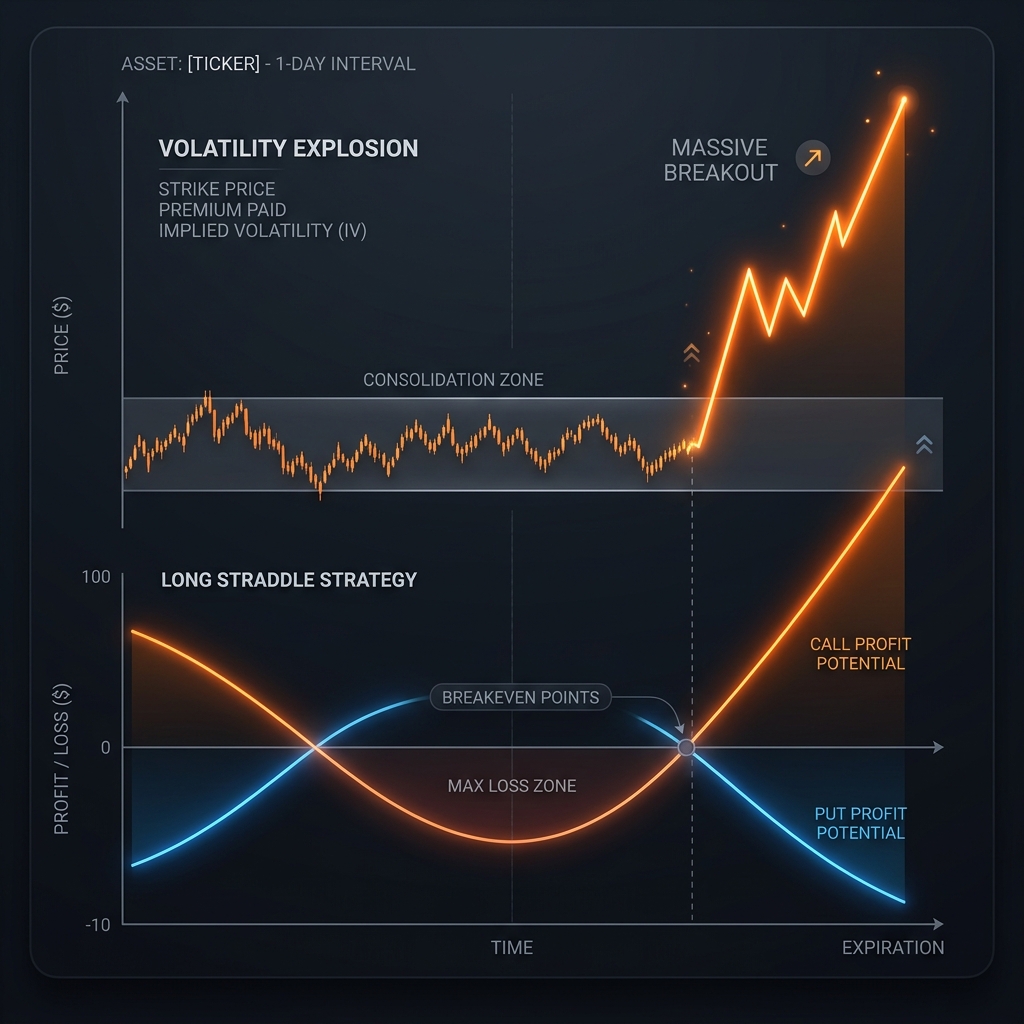
Whether you’re new to zero-days-to-expiration or scaling an existing approach, understanding the fundamentals of 0DTE options strategy is essential before you trade live capital. This guide covers.
The Ultimate Guide to the 0DTE Credit Spread Strategy
If you are looking for a reliable, systematic approach to generating intraday income in the derivatives market, the 0dte credit spread strategy is the foundational starting point. While directional traders are constantly trying to predict exactly where the market is going, premium sellers using credit spreads simply predict where the market will not go.
In this exhaustive, 2,500-word masterclass, we will completely deconstruct the mechanics of 0dte credit spreads. We will explore the mathematical edge of selling 0dte credit spreads, the vital differences between trading a 0dte credit spread spx versus utilizing 0dte spy credit spreads, and the exact step-by-step institutional rules for successfully trading 0dte credit spreads in volatile markets.
By the time you finish this guide, you will know how to execute the perfect 0dte put credit spread on a bullish trend day, how to hedge with bear call spreads, and exactly how to manage gamma risk in the final hours of the session.
Part 1: What is a 0DTE Credit Spread?
A 0DTE (Zero Days to Expiration) credit spread is a defined-risk, directional or neutral options strategy where you simultaneously sell and buy options of the same type (Calls or Puts) expiring on the exact same day, collecting a net credit upfront.
The core philosophy of this strategy is based on theta (time) decay. Because the options expire at 4:00 PM EST today, their extrinsic value rapidly decays to zero. If you sell out-of-the-money (OTM) options, the market just needs to stay away from your strike price for a few hours, and you keep 100% of the premium collected.
The Two Primary Variations
1. The Bull Put Spread (Bullish to Neutral)
This is exactly what it sounds like: a 0dte put credit spread. You implement this when the market is showing strength, grinding higher, or consolidating above strong technical support. You want the market to stay above a certain price.
- The Execution: Sell an OTM Put and buy a further OTM Put for protection.
- The Payoff: You receive a net credit. If the underlying price closes above your short put strike at expiration, both options expire worthless, and you keep the full credit.
- Breakeven: Short Put Strike - Net Credit Received.
Bull Put Credit Spread Payoff (Example: Sell $4110 Put, Buy $4105 Put)
2. The Bear Call Spread (Bearish to Neutral)
You implement this when the market is fading, grinding lower, or trapped under heavy technical resistance (like a massive Gamma Wall). You want the market to stay below a certain price.
- The Execution: Sell an OTM Call and buy a further OTM Call for protection.
- The Payoff: You receive a net credit. If the underlying price closes below your short call strike at expiration, both options expire worthless, and you keep the full credit.
- Breakeven: Short Call Strike + Net Credit Received.
Part 2: Why Selling 0DTE Credit Spreads Provides a Statistical Edge
Retail traders lose money because they buy OTM options hoping for a massive lottery-ticket payout. Institutional traders make money by acting as the casino, selling those exact same lottery tickets. Selling 0dte credit spreads puts you on the side of the casino.
1. A High Probability of Profit (POP)
When you enter a credit spread, you are not requiring the market to make a move in your favor. If you sell a 15-delta 0dte put credit spread, statistical models suggest there is an 85% probability that the option will expire worthless (in your favor). You can be slightly wrong on the direction, totally wrong on the timing, and still win the trade as long as the market doesn’t completely crash through your strike.
2. Structurally Defined Risk
Selling naked options (like a naked put) exposes you to catastrophic, account-destroying risk. The credit spread solves this. By buying the further OTM wing, your maximum loss is strictly capped. You know your absolute worst-case scenario down to the penny before you even click “Confirm Order”.
3. Exponential Theta Decay
Time is the enemy of the option buyer, but it is the best friend of the premium seller. 0DTE options lose their time value at an aggressive, exponential rate throughout the day. Even if the market chops completely sideways for 3 hours, your credit spread will become highly profitable simply because time is running out.
Part 3: SPX vs SPY vs Futures - Choosing Your Instrument
A critical decision you must make when designing your 0dte spx credit spread strategy is choosing the correct underlying asset.
0DTE SPY Credit Spreads
The SPDR S&P 500 ETF (SPY) is the most heavily traded ETF in the world.
- Pros: It is perfectly sized for small accounts. The bid-ask spreads are incredibly tight (often a single penny).
- Cons: SPY options are American-style and settle in shares. This introduces Assignment Risk. If your short strike is breached and you fail to close the trade before 4:00 PM, you could be assigned hundreds of shares of SPY over the weekend, resulting in massive margin calls. Furthermore, SPY options are taxed at standard short-term capital gains rates.
0DTE Credit Spread SPX
The S&P 500 Index (SPX) is the institutional standard. A professional 0dte credit spread spx trade offers several massive advantages.
- Pros: SPX is 10 times larger than SPY, meaning you pay fewer commissions for the same notional exposure. SPX is strictly Cash Settled—there is absolutely zero risk of being assigned shares. Furthermore, SPX options fall under Section 1256 tax treatment in the US, meaning 60% of your gains are taxed at the favorable long-term capital gains rate, regardless of how long you held the trade.
- Cons: Because it is 10x larger, a 5-point wide spread requires $500 in margin. This can be too large for accounts under $5,000 to trade while maintaining proper 1-2% risk management rules.
E-Mini (ES) and Micro (MES) Futures Options
For modern traders, ES and MES futures options offer the absolute best of both worlds. They provide the 60/40 tax benefits and cash settlement of SPX, but operate on SPAN margin, making them incredibly capital efficient. MES (Micro E-mini) options are 1/10th the size of ES, making them the perfect stepping stone for smaller accounts.
Part 4: The 5-Step Execution Protocol for Trading 0DTE Credit Spreads
Successfully trading 0dte credit spreads requires removing emotion and replacing it with a robotic, highly mechanical execution checklist. Follow this protocol strictly.
Wait for the Morning Volatility to Settle
Never blindly enter a credit spread at 9:30 AM EST. The opening 45 minutes are dominated by overnight unwinds and algorithmic chaos. Wait until at least 10:15 AM to allow the Initial Balance to form and the morning IV (Implied Volatility) crush to occur.
Identify the Daily Trend and Gamma Levels
Determine if the market is trending up, down, or chopping sideways. Use moving averages (VWAP or 21 EMA) and Gamma Exposure (GEX) levels. If dealers are long gamma and the market is trending heavily upwards, this is the time to deploy a 0dte put credit spread. Do not step in front of a freight train by selling calls on a trend-up day.
Select the 10 to 15 Delta Strike
Your short strike determines your win rate. Professional traders consistently target the 10 to 15 Delta. This provides an 85-90% probability that the option will expire worthless. Ensure your selected strike sits safely behind a major technical support/resistance wall.
Validate the Risk/Reward (The Credit Check)
You must collect enough premium to justify the risk. For a $5-wide spread on SPX or ES, you should aim to collect between $0.65 and $0.90. If the VIX is incredibly low and a 15-delta spread is only paying $0.35, the mathematical expectancy of the trade is negative. Skip it.
Automate the Exits Immediately
The moment your order fills, immediately route a Good-Til-Canceled (GTC) limit order to buy back the spread at 75% of your max profit. Simultaneously, place a stop-loss alert or order if the premium inflates to 2.5x the credit received.
Part 5: Managing the Trade — The Gamma Trap
The most critical aspect of any 0dte credit spread strategy is managing Gamma risk in the final hours of the day.
Because 0DTE options expire today, their delta changes violently as price moves. This rate of change is called Gamma. At 11:00 AM, a 5-point drop in the market might barely affect your put credit spread. However, at 3:30 PM, that exact same 5-point drop can cause your short put’s delta to spike from 0.15 to 0.75 instantly, turning a winning trade into a max loss in seconds.
The 75% Profit Target Rule
Never try to squeeze the last few pennies out of a credit spread. If you collected $1.00 upfront, set a buy-to-close limit order for $0.25. Locking in a $75 profit and removing all gamma risk from your portfolio is a professional move. Sitting in a trade until 3:59 PM to capture that final $25 while risking $400 is retail gambling.
The Hard Stop Loss
Because credit spreads have a negative risk-to-reward ratio (e.g., risking $400 to make $100), a single max loss wipes out four winning trades. You must implement a strict premium-based stop loss. If you collect $1.00 to open the trade, you must close it for a loss if the price of the spread reaches $2.50 or $3.00.
Do not rely on “mental stops.” When the market moves violently against you, fear and hope will paralyze you. Use automated stop-limit orders or strict platform alerts.
Part 6: Position Sizing and Avoiding Blowups
Even with a perfectly backtested 0dte spx credit spread strategy, improper position sizing will mathematically guarantee your eventual ruin.
The 1% to 2% Rule: You should never risk more than 1% to 2% of your net liquidating value on a single trade.
- If you have a $20,000 account, your maximum acceptable risk per trade is $200 to $400.
- A standard 5-point wide SPX spread risks roughly $400 (Max loss = $500 width - $100 credit = $400).
- Therefore, a $20,000 account should trade exactly ONE contract.
When you win 15 trades in a row (which is highly common with 15-delta credit spreads), you will feel invincible. You will be tempted to increase your size to 10 contracts. The very next day, a 3-sigma trend day will occur, blasting through your strikes and wiping out 25% of your account. Stay disciplined. Trade small. Treat it like a boring insurance business, not a casino.
Part 7: Adapting to Market Regimes
You cannot use the exact same strategy every day. You must adapt to the VIX (Volatility Index).
- Low VIX (Under 14): Premiums are terrible. To collect enough credit, you have to move your strikes dangerously close to the current price. When volatility is this low, credit spreads are incredibly dangerous because the market is prone to sudden, unexpected expansions.
- Mid VIX (15 - 20): This is the sweet spot. Premiums are healthy, allowing you to place your strikes far away from the action while still collecting great income.
- High VIX (Over 25): Premiums are massive. You can place your strikes 80 points away and collect $1.00. However, the market is swinging violently. Widening your spreads to 10 points or switching to Iron Condors is often required to survive the intraday whipsaws.
Part 8: Summary and Final Thoughts
The 0dte credit spread strategy is the bread and butter of the professional income trader. By fundamentally shifting your mindset from buying lottery tickets to selling defined-risk insurance, you put mathematical probability permanently in your favor.
Remember the golden rules:
- Wait for morning volatility to settle before entry.
- Trade with the dominant trend (sell puts on up days, sell calls on down days).
- Stick to the 10-15 delta strikes.
- Never risk more than 2% of your account equity.
- Take profits at 75% and never hold at-risk spreads into the final 30 minutes of Power Hour.
By respecting the incredible power of exponential theta decay while strictly managing the dangers of late-day gamma risk, you can turn 0DTE credit spreads into a robust, daily cash-flow engine.
To further refine your strategy, consider comparing this approach with the 0DTE Covered Call or exploring the mechanics behind 0DTE Iron Butterfly Strategy: The Ultimate Guide. Everything ties back into the foundational concepts available in our 0DTE Strategies Hub.
Rather than guessing the market direction, you can use the 01DTE dashboard to see exactly where market makers are hedged.
Ready to Master 0DTE Credit Spreads?
Stop guessing and start executing with precision. Join our community of professional traders and get access to real-time gamma levels, flow analysis, and institutional-grade trading tools.
Start Trading NowFrequently Asked Questions
What is 0DTE Credit Spread in the context of 0DTE trading?
Yes, understanding 0DTE Credit Spread is critical for day traders. It refers to the specific methodology of managing zero days to expiration positions by leveraging intraday volatility. Traders use this approach to capture rapid premium decay while strictly defining their risk parameters. By utilizing this strategy correctly, you can optimize your entry and exit points throughout the trading session without holding overnight risk.
How does 0DTE Credit Spread impact risk management?
The primary risk when using 0DTE Credit Spread involves sudden intraday market reversals (gamma risk). Because 0DTE options expire the same day, any adverse movement in the underlying asset can result in rapid, exponential losses if left unmanaged. Strict stop losses, position sizing limits (risking no more than 1% to 2% of account capital), and automated risk controls are absolutely essential to survive over the long term.
Is 0DTE Credit Spread suitable for beginner traders?
No, beginners should exercise extreme caution. 0DTE Credit Spread requires a deep understanding of options pricing models, Greek dynamics (especially Gamma and Theta), and order execution speed. Novice traders should spend several months paper trading and backtesting their approach before risking live capital, as the emotional and financial swings associated with this strategy can be overwhelming without prior experience.
What is the best time of day to execute 0DTE Credit Spread?
Execution timing depends heavily on the specific setup, but many professional traders prefer to enter 0DTE Credit Spread trades during the mid-morning session (around 10:30 AM to 11:30 AM EST) after the initial opening volatility has subsided. Others wait for the final two hours of the day (2:00 PM to 4:00 PM EST) to capture the most aggressive phase of theta decay, though this carries elevated directional risk.
Which brokers are best for trading 0DTE Credit Spread?
For executing 0DTE Credit Spread, you need a broker with direct market access, lightning-fast execution, and favorable commission structures. Interactive Brokers, Tastytrade, and ThinkOrSwim (Charles Schwab) are highly recommended by professionals. These platforms offer robust API integrations, advanced charting tools, and the necessary options permissions (Level 2 or higher) required to trade complex intraday strategies effectively.
Disclaimer: This content is for educational purposes only. Not financial advice. Options trading involves substantial risk. Consult a licensed financial advisor before trading. Full disclaimer
Related Articles
0DTE Covered Call Options Trading Strategy | 0DTE Guide
Master the 0DTE covered call — own shares and sell calls for daily income. A conservative strategy for generating returns from existing positions.
0DTE Iron Condor Options Trading Strategy | 0DTE Guide
Master the 0DTE Iron Condor with our comprehensive 0DTE options trading strategy guide. Learn risk management, optimal setups, and maximize your win rate today.
0DTE Cash Secured Put Options Trading Strategy | 0DTE Guide
Master the 0DTE Cash Secured Put 0DTE trading strategy. Learn risk management, setups, and maximize your win rate today with our comprehensive guide.
0DTE Iron Butterfly Options Trading Strategy | 0DTE Guide
Master the iron butterfly 0dte strategy. Learn how to maximize income, manage gamma risk, and execute the 0dte spx iron butterfly strategy effectively.
0DTE Calendar Spread Options Trading Strategy | 0DTE Guide
Master the 0DTE Calendar Spread 0DTE trading strategy. Learn risk management, setups, and maximize your win rate today with our comprehensive guide.