0DTE During High-Vol Events
How to trade 0DTE options during high-volatility events. Learn how to navigate FOMC meetings, geopolitical crises, and market crashes without blowing up your account.
Master Market Panic
When the VIX spikes, amateurs panic. Professionals execute.
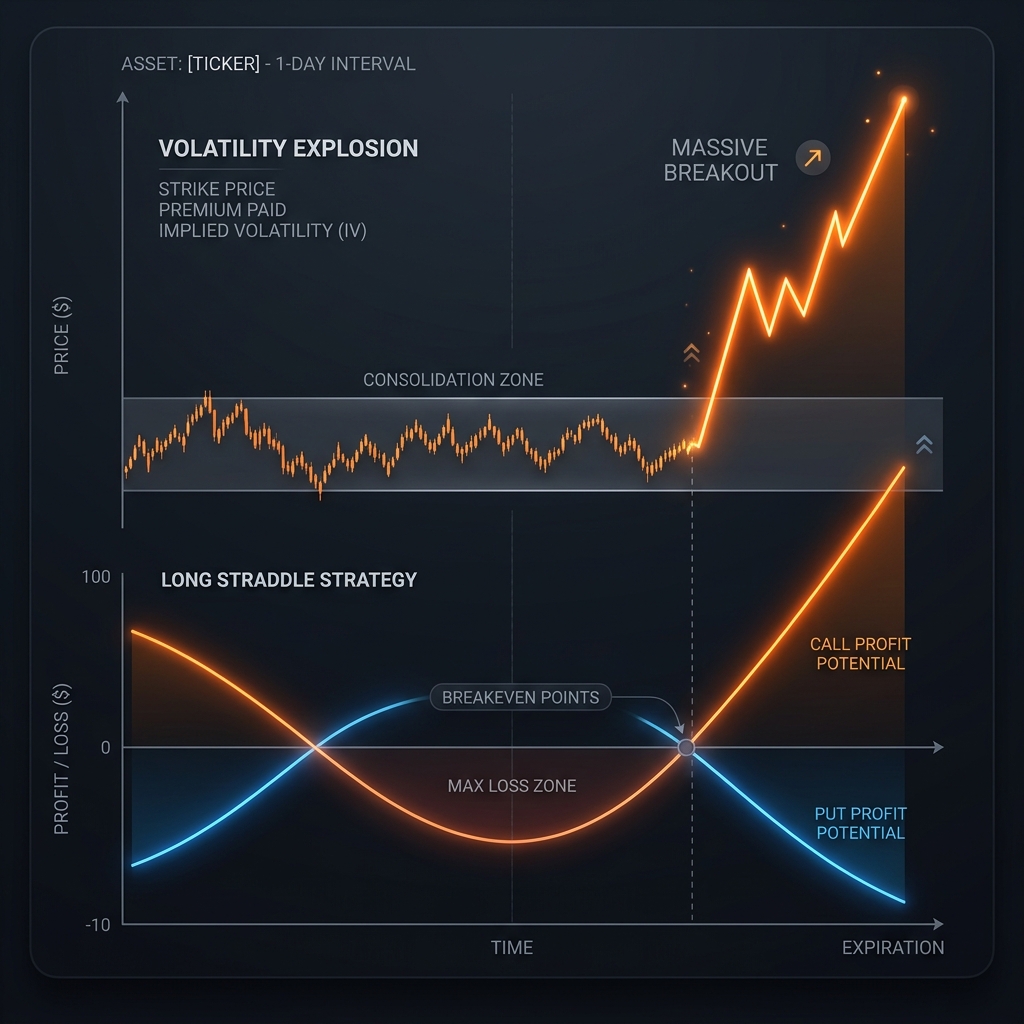
Whether you’re new to zero-days-to-expiration or scaling an existing approach, understanding the fundamentals of this 0DTE trading resource is essential before you trade live capital. This guide covers.
The Anatomy of a High-Vol Regime
In a normal market environment (VIX between 12 and 18), 0DTE options trading is an exercise in surgical precision. You identify tight ranges, sell premium against structural walls, and scalp small, predictable mean-reversions.
When the VIX spikes above 25, the entire rulebook is set on fire.
A High-Volatility regime is characterized by massive institutional panic, aggressive de-risking, and the total breakdown of traditional market maker hedging logic (Negative Gamma). During these events, the S&P 500 can swing 50 to 100 points in a single hour.
For the uneducated retail trader, high volatility is a death sentence. Tight stop losses are immediately wicked out, and credit spreads are blown through before they can be managed. But for the structural 0DTE trader who understands the mechanics of panic, a high-volatility event is the most lucrative environment on earth.
Here is how to classify, prepare for, and trade the three major types of high-volatility events.
Type 1: The Scheduled Volatility (FOMC & CPI)
The most common high-volatility events are scheduled macroeconomic data releases. The Federal Open Market Committee (FOMC) interest rate decisions and the Consumer Price Index (CPI) inflation prints dictate the flow of trillions of dollars.
The Mechanics: Because everyone knows exactly when the news will drop (e.g., 2:00 PM EST for FOMC), market makers artificially inflate the Implied Volatility (IV) of 0DTE options all morning to protect themselves. Options become incredibly expensive. Once the number is released, the IV instantly collapses (IV Crush).
The Playbook:
- The Morning Straddle Sale: If you are an advanced premium seller, you can sell a wide Iron Condor or Strangle at 10:00 AM, capturing the massively inflated IV premium. However, you must close this position by 1:55 PM, right before the data drops.
- The Post-Event Trend: Never hold a directional 0DTE option through the exact minute of the data release. The initial 5-minute candle is often a false algorithmic “whipsaw.” Wait until 2:15 PM. Let the market digest the news, establish a definitive trend, and then buy 0DTE Calls or Puts in the direction of the confirmed institutional flow.
Type 2: The Shock Event (Geopolitics & Flash Crashes)
Unlike FOMC, shock events are entirely unpredictable. A sudden geopolitical conflict, an unexpected banking collapse, or an algorithmic flash crash can instantly spike the VIX from 15 to 35.
The Mechanics: During a shock event, the market enters deep Negative Gamma territory. Market makers, who were previously acting as stabilizers, are suddenly forced to sell into the crash to hedge their massive Short Put exposure. This creates a cascading, self-feeding liquidation loop.
The Playbook:
- Do Not Fade the Crash: The biggest mistake retail traders make is trying to “catch the falling knife.” In a shock event, historical support levels mean absolutely nothing. Do not sell Bull Put Spreads hoping for a bounce.
- Follow the Tape: Use a platform like Unusual Whales to monitor the options flow. If institutions are aggressively sweeping OTM 0DTE Puts at the Ask, they expect the crash to worsen. Join the momentum by buying debit put spreads (to limit IV exposure) and ride the wave down.
Type 3: The Sustained Bear Market (VIX 30+)
Occasionally, a shock event evolves into a sustained bear market, where the VIX remains elevated above 30 for weeks or months (e.g., the 2020 COVID crash or the 2008 Financial Crisis).
The Mechanics: In a sustained high-VIX environment, the daily expected move of the SPX is massive. 0DTE premiums are incredibly rich, but the intraday swings are violent and erratic.
The Playbook:
- Widen Stops and Halve Size: Because the average 1-minute candle is now 3x larger than normal, your standard 5-point stop loss will be triggered by random noise. You must widen your stop loss to 15 points, but reduce your position size by 60% to ensure your total dollar risk remains the same.
- Trade the Outer Edges: If you are selling Credit Spreads, you can now sell strikes that are 60 or 70 points away from the current price and still collect excellent premium. Stay as far Out-Of-The-Money as mathematically possible.
The Four Iron Rules of High-Vol Trading
If you choose to trade 0DTE when the VIX is above 25, you must permanently adopt these four rules:
- Never Trade Naked Options: Selling naked Calls or Puts in a high-vol environment is financial suicide. A sudden 100-point rip in the SPX will trigger a margin call that wipes out your entire net worth. Strictly use defined-risk Credit Spreads or Iron Condors.
- Embrace the Debit Spread: Because IV is so high, buying straight Calls or Puts is very expensive. To mitigate this, buy Debit Spreads. You cap your upside, but you drastically reduce the upfront cost and neutralize the Vega (volatility) risk.
- Use Limit Orders Exclusively: During a high-volatility event, bid/ask spreads widen massively. If you use a Market Order to exit a trade during a panic, the slippage could cost you thousands of dollars. Always use Limit Orders.
- Accept the Chop: High volatility does not always mean a clean trend. Often, it means violent, 30-point whipsaws up and down. If you get chopped out of two trades in the morning, close your laptop. High-vol environments will rapidly destroy the account of an emotional “revenge trader.”
Conclusion: Respecting the Ocean
Trading 0DTE options in a low-VIX environment is like sailing on a calm lake. Trading in a high-VIX environment is like navigating a Category 5 hurricane. The profit potential is staggering—fortunes are made during market crashes—but you must respect the raw power of the ocean. By sizing down, widening your parameters, and strictly adhering to defined-risk mechanics, you can extract massive profits from the chaos while the rest of the retail market gets washed away.
Master Volatility Trading
Stop getting stopped out during market panics. Join 01DTE.com to access elite VIX-adjusted strategy parameters, live crisis-management alerts, and institutional hedging frameworks.
Start Trading with 01DTE
Disclaimer: This content is for educational purposes only. Not financial advice. Options trading involves substantial risk. Consult a licensed financial advisor before trading. Full disclaimer
Related Articles
0DTE Calendar Spread Options Trading Strategy | 0DTE Guide
Master the 0DTE Calendar Spread 0DTE trading strategy. Learn risk management, setups, and maximize your win rate today with our comprehensive guide.
0DTE Ratio Spread Options Trading Strategy | 0DTE Guide
Master the 0DTE Ratio Spread 0DTE trading strategy. Learn risk management, setups, and maximize your win rate today with our comprehensive guide.
0DTE Iron Butterfly Options Trading Strategy | 0DTE Guide
Master the iron butterfly 0dte strategy. Learn how to maximize income, manage gamma risk, and execute the 0dte spx iron butterfly strategy effectively.
0DTE Diagonal Spread Options Trading Strategy | 0DTE Guide
Master the 0DTE Diagonal Spread 0DTE trading strategy. Learn risk management, setups, and maximize your win rate today with our comprehensive guide.
How 0DTE Options Structure Affects Futures Trading
Understand how 0DTE options market structure impacts ES and NQ futures. How gamma exposure, pin risk, and settlement create futures trading opportunities.