Weekly 0DTE Market Recap: The Professional Blueprint
How to conduct a professional weekly 0DTE market recap. Learn to build a review system that ruthlessly eliminates mistakes and sharpens your trading edge.
Last updated: 2026-09-24
Review, Refine, Profit
Stop repeating the same expensive mistakes. Learn the institutional review process.
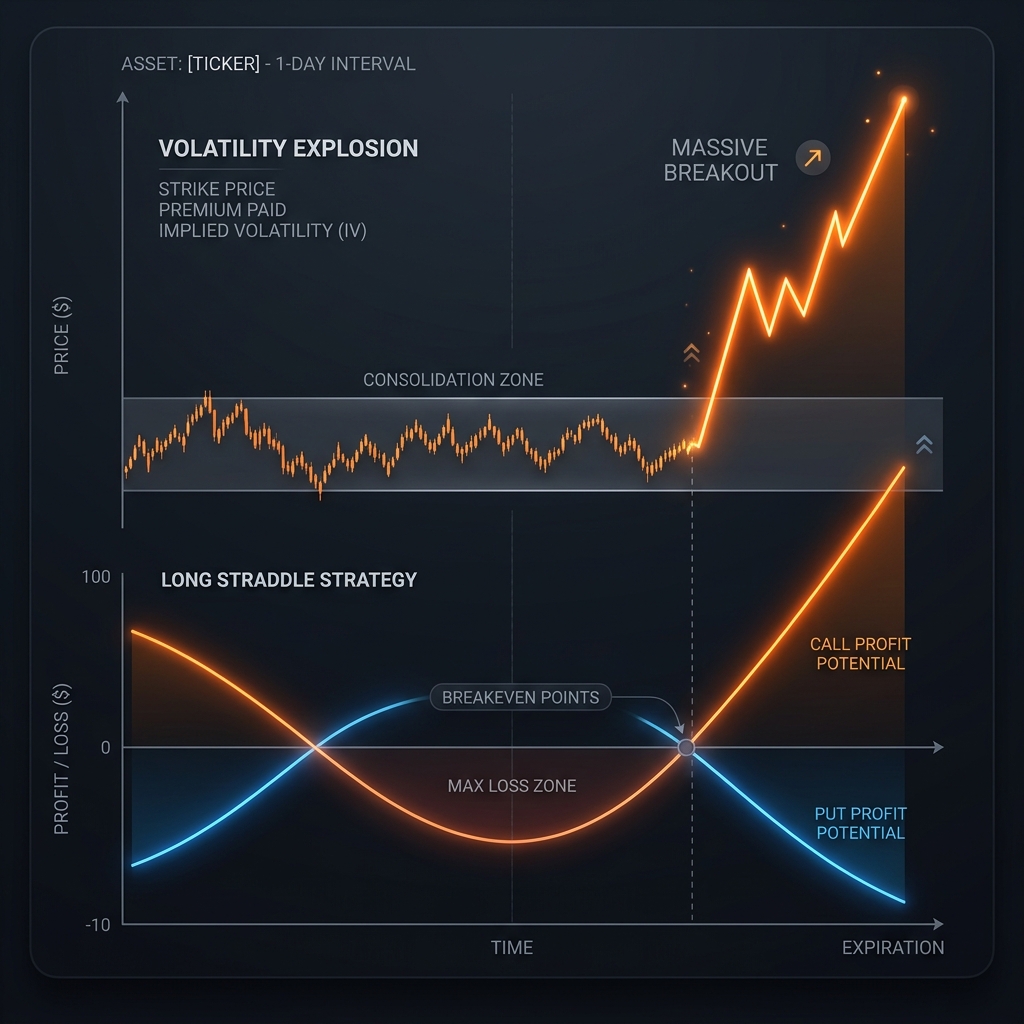
Whether you’re new to zero-days-to-expiration or scaling an existing approach, understanding the fundamentals of master 0DTE trading is essential before you trade live capital. This guide covers.
The Illusion of Screen Time
A dangerous myth in the retail trading community is that “screen time” equals experience. A trader will stare at a 1-minute chart of the S&P 500 for 40 hours a week, execute 50 erratic 0DTE trades, lose $2,000, and assume they are getting “closer” to profitability because they put in the hours.
This is fundamentally false. Screen time without structured review only reinforces bad habits.
In high-performance professions—whether it’s professional athletics, chess, or institutional trading—improvement happens after the event. The athlete watches the game tape. The chess grandmaster analyzes the blunders. The professional 0DTE trader conducts a ruthless, objective Weekly Market Recap.
Because 0DTE (Zero Days to Expiration) trading is so fast-paced, it is impossible to learn from your mistakes in real-time. By Friday afternoon, your brain is fatigued, and the emotional sting of a loss obscures the mathematical reality of what went wrong. To build a sustainable trading business, you must implement a structured weekend review protocol.
The Institutional Recap Blueprint
A professional weekly recap is not just a glance at your P&L statement to see if you made money. It is a forensic audit of your execution, your psychology, and the market’s structural behavior over the last five days.
Every Saturday morning, when the market is closed and emotions are detached, run through these three critical modules.
Module 1: The Macro Market Review
Before looking at your own trades, you must contextualize the environment you traded in. If you lost money, was it because your strategy failed, or because the market regime shifted and you didn’t notice?
- VIX and Volatility: What was the VIX range for the week? Did we transition from a low-volatility environment (VIX 12) to a high-volatility environment (VIX 18)? If so, did you reduce your position sizing accordingly?
- Gamma Exposure (GEX): Did the market spend the week in Positive Gamma (mean-reverting chop) or Negative Gamma (violent trends)?
- The Major Catalysts: How did the market react to the week’s major economic data (CPI, FOMC, Jobless Claims)? Did it gap and run, or chop and reverse?
Actionable Insight: If you realize the entire week was trapped in a 30-point Positive Gamma chop, and you lost money trying to buy directional breakouts, your mistake wasn’t poor execution—it was poor regime identification.
Module 2: The Execution Audit
This is where you pull up your broker statements and review the hard data.
- Win Rate vs. Risk/Reward: What was your actual win rate this week? More importantly, what was your average winner compared to your average loser? If you won 8 out of 10 trades, but your 2 losses wiped out all your profits, your risk management system is completely broken.
- The A+ Setup Check: Look at your 3 biggest losing trades. Did they conform to your written trading plan? Did they trigger at a valid support/resistance level with options flow confirmation? If the answer is no, those were not “bad trades”; those were emotional gambles.
- The Stop Loss Audit: Did you honor your hard stop losses on every single trade? Or did you pull a stop loss hoping the market would reverse, turning a 2% loss into a 10% catastrophe? Be brutally honest.
Module 3: The Psychological Review
0DTE trading is 20% mathematics and 80% emotional control.
- The Overtrading Metric: How many trades did you take on Wednesday? Did you really see 15 valid setups, or were you bored?
- The Revenge Trade: Identify the moment you took a loss and immediately re-entered a worse position with double the size to “win it back.” Document what triggered that emotion.
- The Fatigue Factor: Were all your losing trades concentrated after 2:00 PM? This strongly indicates mental fatigue. If you cannot maintain discipline in the afternoon, establish a hard rule to close your platform at 1:00 PM.
The Weekly Template (Example Application)
Here is how a professional trader fills out their journal.
Week of October 12th-16th
- Macro Environment: VIX spiked from 14 to 19. Market transitioned into Negative Gamma on Wednesday. Intraday ranges doubled.
- Performance: 12 Trades. 7 Winners, 5 Losers. Win Rate: 58%. Net P&L: -$450.
- The Autopsy (What went wrong): I lost money despite a positive win rate because I failed to widen my stop losses when the VIX spiked. I got chopped out of three perfectly good trend trades on algorithmic wicks, only to watch the market hit my target 10 minutes later.
- The Rule Change (For next week): If the VIX opens above 18, I will physically cut my contract size in half, but double the distance of my stop loss. I will give the trade room to breathe in the higher volatility regime.
Building the Feedback Loop
The purpose of the weekly recap is to build a closed feedback loop. You identify a specific, recurring mistake (e.g., “I keep buying breakouts during the midday lull and getting crushed by Theta”), and you write a specific, actionable rule to prevent it next week (“I am not allowed to open new long positions between 11:30 AM and 1:30 PM”).
If you commit to this process every single weekend, you will slowly eliminate your psychological leaks. You will stop fighting the market and start trading in alignment with your own documented edge.
Journal Like a Professional
Stop repeating the same expensive mistakes. Join 01DTE.com to access automated trading journals, advanced P&L analytics, and weekly institutional market reviews.
Start Trading with 01DTE
Keep Learning
- Parent Hub: Return to the main 0DTE Trading Blog
- Related Post: 0DTE On Expiration Fridays
- Related Post: Trading 0DTE Around Earnings
Frequently Asked Questions
What is Weekly 0DTE Market Recap in the context of 0DTE trading?
Yes, understanding Weekly 0DTE Market Recap is critical for day traders. It refers to the specific methodology of managing zero days to expiration positions by leveraging intraday volatility. Traders use this approach to capture rapid premium decay while strictly defining their risk parameters. By utilizing this strategy correctly, you can optimize your entry and exit points throughout the trading session without holding overnight risk.
How does Weekly 0DTE Market Recap impact risk management?
The primary risk when using Weekly 0DTE Market Recap involves sudden intraday market reversals (gamma risk). Because 0DTE options expire the same day, any adverse movement in the underlying asset can result in rapid, exponential losses if left unmanaged. Strict stop losses, position sizing limits (risking no more than 1% to 2% of account capital), and automated risk controls are absolutely essential to survive over the long term.
Is Weekly 0DTE Market Recap suitable for beginner traders?
No, beginners should exercise extreme caution. Weekly 0DTE Market Recap requires a deep understanding of options pricing models, Greek dynamics (especially Gamma and Theta), and order execution speed. Novice traders should spend several months paper trading and backtesting their approach before risking live capital, as the emotional and financial swings associated with this strategy can be overwhelming without prior experience.
What is the best time of day to execute Weekly 0DTE Market Recap?
Execution timing depends heavily on the specific setup, but many professional traders prefer to enter Weekly 0DTE Market Recap trades during the mid-morning session (around 10:30 AM to 11:30 AM EST) after the initial opening volatility has subsided. Others wait for the final two hours of the day (2:00 PM to 4:00 PM EST) to capture the most aggressive phase of theta decay, though this carries elevated directional risk.
Which brokers are best for trading Weekly 0DTE Market Recap?
For executing Weekly 0DTE Market Recap, you need a broker with direct market access, lightning-fast execution, and favorable commission structures. Interactive Brokers, Tastytrade, and ThinkOrSwim (Charles Schwab) are highly recommended by professionals. These platforms offer robust API integrations, advanced charting tools, and the necessary options permissions (Level 2 or higher) required to trade complex intraday strategies effectively.
Disclaimer: This content is for educational purposes only. Not financial advice. Options trading involves substantial risk. Consult a licensed financial advisor before trading. Full disclaimer
Related Articles
0DTE Credit Spread Options Trading Strategy | 0DTE Guide
Master the 0DTE Credit Spread 0DTE trading strategy. Learn risk management, setups, and maximize your win rate today with our comprehensive guide.
0DTE Covered Call Options Trading Strategy | 0DTE Guide
Master the 0DTE covered call — own shares and sell calls for daily income. A conservative strategy for generating returns from existing positions.
0DTE Cash Secured Put Options Trading Strategy | 0DTE Guide
Master the 0DTE Cash Secured Put 0DTE trading strategy. Learn risk management, setups, and maximize your win rate today with our comprehensive guide.
0DTE Calendar Spread Options Trading Strategy | 0DTE Guide
Master the 0DTE Calendar Spread 0DTE trading strategy. Learn risk management, setups, and maximize your win rate today with our comprehensive guide.
Unusual Whales Review 0DTE | 0DTE Options Trading Strategy
Master the Unusual Whales Review 0DTE 0DTE trading strategy. Learn risk management, setups, and maximize your win rate today with our comprehensive guide.