0DTE Delta Hedging Futures | 0DTE Options Trading Strategy
Learn how delta hedging with 0DTE options can fundamentally transform futures trading. Master practical approaches to neutralizing directional risk intraday.
Dynamic Delta Hedging
Protect your futures positions from massive intraday reversals.
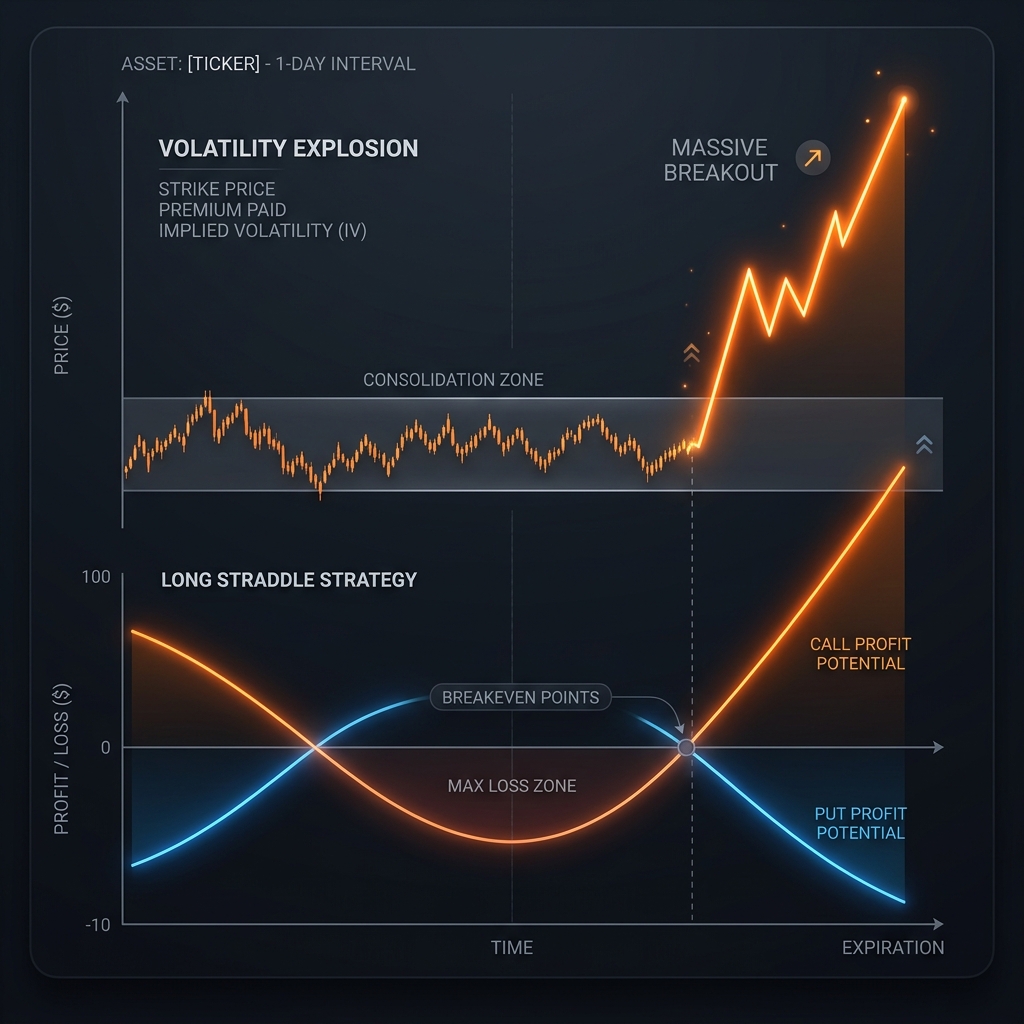
Whether you’re new to zero-days-to-expiration or scaling an existing approach, understanding the fundamentals of 0DTE trading is essential before you trade live capital. This guide covers.
What is Delta Hedging?
Delta hedging is the foundational risk management technique used by institutional market makers and professional trading desks worldwide. At its core, it is the process of using options contracts to completely offset, or “neutralize,” the directional risk of a primary asset—in this case, E-mini S&P 500 (ES) futures.
Delta is the Greek metric that measures how much an option’s price will change for every $1 move in the underlying asset.
- A long ES futures contract has a static Delta of +1.0 (it makes money when the market goes up).
- A short ES futures contract has a static Delta of -1.0 (it makes money when the market goes down).
- 0DTE Put options have a negative Delta (e.g., -0.30).
- 0DTE Call options have a positive Delta (e.g., +0.30).
By combining a futures position with the mathematical equivalent of 0DTE options, a trader can create a “Delta Neutral” portfolio. When you are delta neutral, you no longer care if the market crashes or skyrockets. You are immunized against directional risk.
While traditional delta hedging uses monthly options, the explosion of 0DTE options has allowed retail traders to dynamically delta hedge their intraday futures scalps and day trades with pinpoint precision.
The Mechanics of Intraday Delta Hedging
Why would a futures day trader want to neutralize their directional risk? Because futures are highly leveraged, and a sudden, unexpected 20-point reversal can devastate an account. Delta hedging acts as an insurance policy that allows a trader to hold a futures position through violent volatility without getting stopped out.
The Downside Hedge (Long ES + Long Puts)
- The Scenario: You enter a long ES futures position at 5100, expecting a massive rally. However, Jerome Powell is scheduled to speak in 30 minutes, and the market could violently drop. You do not want to use a tight stop loss because the initial volatility might wick you out before the rally begins.
- The Hedge: You buy 0DTE OTM Puts equivalent to your futures delta. If you hold 1 ES contract (Delta +1.0), you might buy three 0DTE 5050 Puts (Delta -0.33 each). Your net position Delta is now roughly 0.
- The Result: If Powell speaks and the market flashes down 40 points, your ES futures contract will lose significant value. However, the 0DTE Puts you bought will explode in value, effectively offsetting the loss in the futures contract. You survived the volatility spike.
The Upside Hedge (Short ES + Long Calls)
- The Scenario: You are short the ES futures at 5100, anticipating a breakdown. But you are worried about a sudden short-squeeze triggered by a news headline.
- The Hedge: You buy 0DTE OTM Calls to offset your short futures delta.
- The Result: If the market rips 30 points higher, your short futures position is bleeding. But the 0DTE Calls you own will instantly transition In-The-Money (ITM), and their exploding value will cover the futures drawdown, capping your maximum loss to the premium you paid for the calls.
Dynamic Hedging: Managing Gamma
A static delta hedge only works for a short period of time. Because options have Gamma (the rate at which Delta changes as price moves), your delta-neutral position will quickly become unbalanced as the ES futures price moves.
If you are Long ES (+1.0) and Long Puts (-1.0), and the market drops 20 points, the Puts will gain Delta (e.g., moving from -0.33 to -0.60). Your total Delta is now negative (-0.8). You are no longer delta neutral; you are actually net-short the market.
Dynamic Delta Hedging is the active process of constantly buying or selling micro-futures (MES) throughout the day to re-zero your Delta as the options Gamma shifts. This is exactly what market makers do all day long. For a retail trader, dynamic hedging requires sophisticated software and deep liquidity, but it allows you to theoretically lock in profits purely from market volatility, regardless of direction.
The Strategic Benefits for the Retail Trader
- Surviving the Chop: 0DTE delta hedging allows you to hold high-conviction futures trades through the brutal morning “chop” that typically triggers tight stop losses.
- Gamma Scalping: By holding a delta-neutral position consisting of Long Futures and Long Options, you are “Long Gamma.” As the market whipsaws up and down, your delta becomes unbalanced. You can actively scalp micro-futures against this imbalance, taking profits on every swing while maintaining the core hedge.
- Event-Driven Trading: Hedging allows you to trade through CPI prints, FOMC meetings, and non-farm payroll releases without exposing your account to catastrophic gap risk.
The Hidden Costs and Risks
Delta hedging is not a magic shield; it comes with significant structural costs that will bleed your account dry if mismanaged.
1. The Theta Bleed
0DTE options have the most aggressive time decay (Theta) in the financial universe. When you buy 0DTE options to hedge your futures position, that “insurance policy” is losing value every single minute. If you delta hedge your ES long position, and the market simply chops sideways for 3 hours, your futures contract will be flat, but your 0DTE puts will expire worthless. You will take a net loss on the trade entirely due to theta decay.
2. The Volatility Tax (Vega)
You must pay for the hedge. If you decide to delta hedge your futures position right before a major news event, Implied Volatility (IV) will be massively inflated. You will overpay for the 0DTE options. Once the event passes, IV will crush. Even if the market moves in your favor, the IV crush on your options might negate a large portion of your futures profit.
3. Execution Drag (Bid/Ask Spreads)
Dynamic delta hedging requires constantly buying and selling options and futures to maintain neutrality. Every time you cross the bid/ask spread and pay a commission, you incur “slippage.” For retail traders, this execution drag can quickly eat up any profits generated by Gamma scalping.
Conclusion: A Professional Tool, Not a Crutch
0DTE delta hedging is not meant for the average directional scalper. It is a highly complex, mathematically intensive strategy designed for volatility traders and institutional risk managers.
If you are consistently losing money scalping futures because your thesis is wrong, delta hedging will not save you—it will simply increase your trading costs and accelerate your losses through Theta decay.
However, if you are a consistently profitable futures trader who struggles with being prematurely stopped out during volatile intraday swings, learning to strategically deploy 0DTE hedges can be the final piece of the puzzle. It transforms you from a vulnerable directional speculator into a fully protected, structural market participant.
The Institutional Edge: Decoding Market Maker Positioning
Retail traders often focus exclusively on price charts, technical indicators, and moving averages. However, in the realm of 0DTE options, price action is merely a symptom of a much larger underlying structure: Dealer Positioning.
Institutional options dealers (market makers) are obligated to take the other side of your trades. When you buy a call, they are short that call. To remain delta-neutral and protect their massive portfolios, these dealers must constantly buy and sell the underlying futures (ES or NQ) to hedge their options exposure.
Understanding Gamma Squeezes
When market makers are caught with “negative gamma” (meaning they are short options that are rapidly moving into the money), they are forced to buy the underlying futures as the market rises, or sell as it falls. This forced buying/selling accelerates the trend, creating a Gamma Squeeze.
Negative Gamma Regimes
In these environments, dealer hedging accelerates market moves. Volatility expands, intraday swings become violent, and momentum strategies (like buying breakouts) thrive.
Positive Gamma Regimes
In these environments, dealers trade against the trend (buying dips, selling rips) to stay neutral. Volatility compresses, the market chops sideways, and mean-reversion strategies thrive.
Advanced Risk Management for Index Futures
Trading 0DTE options on index futures is inherently leveraged. Without a strict, mathematically defined risk management framework, an account can be liquidated in a single afternoon.
The 1% Rule
The foundational rule of professional intraday trading is the 1% rule. Never risk more than 1% of your total account equity on a single 0DTE trade setup. If you have a $10,000 account, your maximum acceptable loss per trade is $100.
Defining Risk in 0DTE
If you are buying premium (long calls/puts), your risk is naturally defined by the premium paid. However, if you are selling premium (credit spreads), your risk is the width of the spread minus the credit received. Always calculate your absolute max loss before clicking the buy button.
Sequential Stop Losses
Professionals do not use static stop losses on 0DTE options because the premium fluctuates too wildly due to Gamma and Vega expansion. Instead, they use structural stops based on the underlying futures price. If ES breaks a critical support level, the option is immediately liquidated, regardless of its current P&L percentage.
The Psychology of Intraday Leverage
The primary reason traders fail in the 0DTE futures space is not a lack of technical knowledge; it is a breakdown in psychological discipline.
The Dopamine Trap
0DTE options provide immediate feedback. Within 15 minutes, you can be up 50% or down 50%. This creates a dopamine feedback loop identical to casino gambling. When a trader hits a massive 300% winner, their brain rewires itself to seek that exact high again, leading to over-leveraging and abandoning proven strategies.
Revenge Trading
After a sharp loss, the instinct is to immediately double the position size on the next trade to “make it back.” This is the fastest way to blow an account.
Fear of Missing Out (FOMO)
Watching the market trend 50 points without you causes immense psychological pain. Entering a trade late simply because it is moving usually results in buying the exact top.
Comprehensive FAQ: 0DTE Futures Trading
Why trade 0DTE on Futures instead of SPY?
Futures options (like ES and NQ) enjoy Section 1256 tax treatment (60% long-term / 40% short-term capital gains) in the US, providing massive tax advantages over SPY. Additionally, futures offer deep overnight liquidity and avoid Pattern Day Trader (PDT) rule restrictions.
What is the best time of day to trade 0DTE?
The highest probability setups occur between 9:45 AM (after initial volatility settles) and 11:30 AM EST, and again during the “Power Hour” from 3:00 PM to 4:00 PM EST. The midday session is typically choppy and dangerous due to heavy theta decay.
How much capital is required?
While some brokerages allow micro-futures trading with just $500, a professional account should have a minimum of $5,000 to safely absorb intraday drawdowns and size positions correctly (using the 1% rule).
Do I need Level 2 data?
While traditional Level 2 (order book) data is helpful, institutional derivatives data (GEX, Max Pain, options order flow) is significantly more important for 0DTE trading, as options market makers dictate intraday index pinning.
To further refine your strategy, consider comparing this approach with the 0DTE VIX Signals for NQ Futures or exploring the mechanics behind 0DTE Breadth Indicators and Futures Direction. Everything ties back into the foundational concepts available in our 0DTE for Futures Hub.
For real-time confirmation of these structures, many professional traders use the 01DTE dashboard to track institutional positioning.
Ready to Master Delta Hedging Strategies for Futures?
Stop guessing and start executing with precision. Join our community of professional traders and get access to real-time gamma levels, flow analysis, and institutional-grade trading tools.
Start Trading NowFrequently Asked Questions
What is 0DTE Delta Hedging Futures in the context of 0DTE trading?
Yes, understanding 0DTE Delta Hedging Futures is critical for day traders. It refers to the specific methodology of managing zero days to expiration positions by leveraging intraday volatility. Traders use this approach to capture rapid premium decay while strictly defining their risk parameters. By utilizing this strategy correctly, you can optimize your entry and exit points throughout the trading session without holding overnight risk.
How does 0DTE Delta Hedging Futures impact risk management?
The primary risk when using 0DTE Delta Hedging Futures involves sudden intraday market reversals (gamma risk). Because 0DTE options expire the same day, any adverse movement in the underlying asset can result in rapid, exponential losses if left unmanaged. Strict stop losses, position sizing limits (risking no more than 1% to 2% of account capital), and automated risk controls are absolutely essential to survive over the long term.
Is 0DTE Delta Hedging Futures suitable for beginner traders?
No, beginners should exercise extreme caution. 0DTE Delta Hedging Futures requires a deep understanding of options pricing models, Greek dynamics (especially Gamma and Theta), and order execution speed. Novice traders should spend several months paper trading and backtesting their approach before risking live capital, as the emotional and financial swings associated with this strategy can be overwhelming without prior experience.
What is the best time of day to execute 0DTE Delta Hedging Futures?
Execution timing depends heavily on the specific setup, but many professional traders prefer to enter 0DTE Delta Hedging Futures trades during the mid-morning session (around 10:30 AM to 11:30 AM EST) after the initial opening volatility has subsided. Others wait for the final two hours of the day (2:00 PM to 4:00 PM EST) to capture the most aggressive phase of theta decay, though this carries elevated directional risk.
Which brokers are best for trading 0DTE Delta Hedging Futures?
For executing 0DTE Delta Hedging Futures, you need a broker with direct market access, lightning-fast execution, and favorable commission structures. Interactive Brokers, Tastytrade, and ThinkOrSwim (Charles Schwab) are highly recommended by professionals. These platforms offer robust API integrations, advanced charting tools, and the necessary options permissions (Level 2 or higher) required to trade complex intraday strategies effectively.
Disclaimer: This content is for educational purposes only. Not financial advice. Options trading involves substantial risk. Consult a licensed financial advisor before trading. Full disclaimer
Related Articles
0DTE Volatility Skew Futures Entry | 0DTE Options Strategy
Learn the 0DTE Volatility Skew Futures Entry 0DTE options strategy. Discover risk management and maximize your win rate today. Start trading smarter.
0DTE Credit Spread Options Trading Strategy | 0DTE Guide
Master the 0DTE Credit Spread 0DTE trading strategy. Learn risk management, setups, and maximize your win rate today with our comprehensive guide.
0DTE Calendar Spread Options Trading Strategy | 0DTE Guide
Master the 0DTE Calendar Spread 0DTE trading strategy. Learn risk management, setups, and maximize your win rate today with our comprehensive guide.
Bookmap Alternative 0DTE Futures | 0DTE Options Strategy
Master the Bookmap Alternative 0DTE Futures 0DTE trading strategy. Learn risk management, setups, and maximize your win rate today with our comprehensive guide.
0DTE Vertical Spread Options Trading Strategy | 0DTE Guide
Master the 0DTE Vertical Spread 0DTE trading strategy. Learn risk management, setups, and maximize your win rate today with our comprehensive guide.