0DTE Pin Risk Futures Settlement | 0DTE Options Strategy
Master the 0DTE Pin Risk Futures Settlement 0DTE trading strategy. Learn risk management, setups, and maximize your win rate today with our comprehensive guide.
The Power of the Pin
Trade the structural mechanics of the 4:00 PM closing auction.
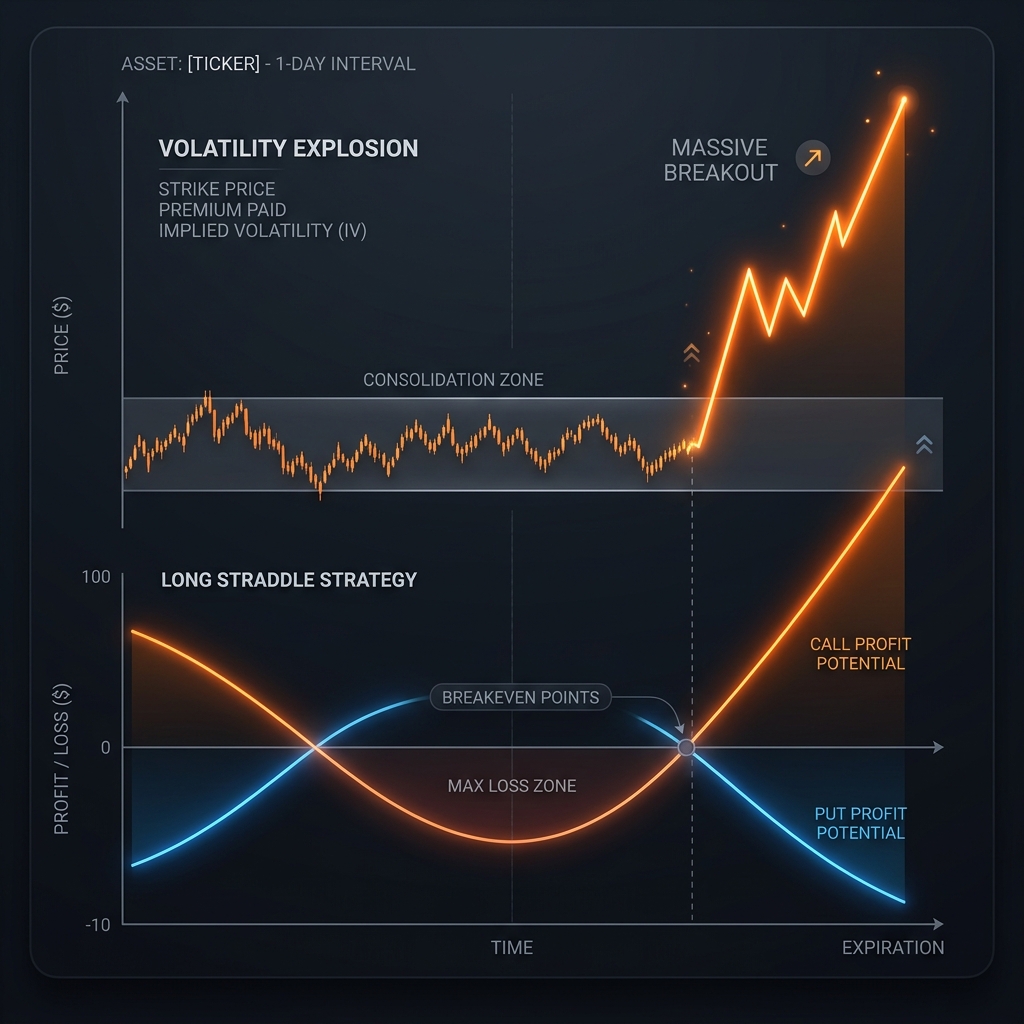
Whether you’re new to zero-days-to-expiration or scaling an existing approach, understanding the fundamentals of 0DTE options trading strategy is essential before you trade live capital. This guide covers.
The Anatomy of Pin Risk
To the uninitiated retail trader, the final 30 minutes of the trading day (3:30 PM to 4:00 PM EST) looks like pure, unadulterated chaos. Spreads widen, volume explodes, and the E-mini S&P 500 (ES) futures whip violently back and forth in massive algorithmic candles.
However, to the structural options trader, this chaos is actually highly organized. It is the mechanical manifestation of Pin Risk.
Pin Risk occurs when the underlying asset’s price is hovering dangerously close to a major options strike price as the expiration clock runs out. Because 0DTE (Zero Days to Expiration) options expire at the end of the current trading session, the options market and the futures market engage in a violent, high-stakes tug-of-war for final settlement.
Market makers have sold millions of contracts at specific strike prices. If the market closes just $1 above a massive Call strike, the market maker owes the option buyers millions of dollars. If it closes $1 below, the options expire worthless, and the market maker keeps 100% of the premium.
To ensure the latter scenario, market makers use ES futures to aggressively hedge their exposure, creating a gravitational pull that “pins” the market to specific levels.
How the Pin Mechanics Manipulate Futures
The “Pin” is created by the interaction between Gamma (price sensitivity) and time decay.
Imagine the ES is trading at 5148 at 3:30 PM. There is a massive wall of Call and Put Open Interest sitting exactly at the 5150 strike.
- As the clock ticks toward 4:00 PM, the options right at 5150 become hyper-sensitive to every tick (Peak Gamma).
- If the ES drops to 5145, option dealers who are short puts at 5150 are now underwater. They must instantly sell ES futures to hedge their loss, accelerating the drop.
- However, if the ES drops too far, the options lose their Delta, and the dealers no longer need the hedge. They buy the futures back, pushing the price back up.
The result is a self-correcting algorithmic feedback loop. The ES futures are violently pulled toward the 5150 strike, unable to escape its gravitational pull. The market is “pinned.”
The Three Phases of the Settlement Window
Trading the final 30 minutes requires abandoning traditional technical analysis. A moving average crossover at 3:50 PM is meaningless. You are now trading pure market microstructure.
Phase 1: The Drift (3:00 PM - 3:30 PM)
As European markets have long closed and midday volume dries up, the underlying structural forces of the options market begin to take control. If there is a massive Open Interest magnet (Max Pain) 10 points away, the market will usually begin a slow, highly controlled, algorithmic drift toward that strike.
- The Futures Play: Identify the strike with the heaviest 0DTE Open Interest. If the ES is slowly bleeding toward it on low volume, you can join the drift with a small micro-futures (MES) position.
Phase 2: The Gamma Trap (3:30 PM - 3:55 PM)
This is the danger zone. The ES has reached the Pin level (e.g., 5150). The market will now whip violently in a 5-to-10 point range around the strike. It will shoot up to 5155, trapping breakout buyers, then instantly collapse to 5145, trapping breakdown shorts.
- The Futures Play: Fade the extremes. This is a mean-reverting scalper’s paradise. If you know the market is pinned to 5150, you set bracket orders to short the ES at 5155 and buy it at 5145. You are acting as a liquidity provider, scalping the algorithmic hedging volatility.
Phase 3: The Closing Imbalance (3:55 PM - 4:00 PM)
In the final 5 minutes, Market On Close (MOC) orders hit the tape. Massive mutual funds and ETFs must rebalance their portfolios, injecting billions of dollars of raw directional volume into the market. This order flow can instantly overpower the options Pin.
- The Futures Play: Flatten your book. Professional day traders do not hold directional futures positions through the MOC imbalance unless they have a massive profit cushion. The slippage is immense, and the price action is purely dictated by forced institutional rebalancing. Close your trades at 3:55 PM.
The Aftermath: The 4:00 PM Unwind
One of the most highly guarded secrets of structural trading is the “Post-Settlement Unwind.”
At exactly 4:00 PM EST, the 0DTE options expire. Instantly, all of the Gamma and Delta risk associated with those options vanishes from the market makers’ books.
If market makers had to buy 10,000 ES futures contracts into the close just to keep the market pinned and hedge their options risk, they no longer need those futures at 4:01 PM. Because the risk is gone, they will immediately dump those 10,000 contracts into the after-hours market.
This creates a highly predictable counter-trend reversal in the futures market immediately following the closing bell. If the ES was artificially dragged up 15 points in the final hour to pin a strike, it will almost always immediately gap down 5 to 10 points after 4:00 PM as the hedges are aggressively unwound.
Execution Rules for Pin Risk Trading
- Require the Data: You cannot trade Pin Risk without live options Open Interest data. You must know exactly where the heavy strikes are located. Attempting to guess the pin level based on a candlestick chart is gambling.
- Respect the Trend: Pin Risk only works in neutral or consolidating markets. If the market is down 2% on a massive macroeconomic catalyst, market makers will not attempt to pin the price; they will simply buy puts to hedge and let the market crash. Never fight a true trend trade just because a heavy OI strike is nearby.
- Size Down: The volatility during the Gamma Trap phase (3:30 PM) is extreme. Wicks will frequently trigger standard stop losses. Trade 1/4 or 1/2 of your normal position size, and consider using Micro E-mini (MES) contracts to widen your stops while maintaining the same dollar risk.
Conclusion: Seeing the Matrix
To the untrained eye, the end-of-day volatility on the ES futures chart is a random walk driven by panic. But once you understand the mechanics of 0DTE Pin Risk, the chaos becomes a beautifully orchestrated dance of institutional hedging. By reading the options chain, you can see the invisible walls that the market is bouncing between, allowing you to scalp the volatility with precision, fade the traps, and step aside before the closing bell rings.
The Institutional Edge: Decoding Market Maker Positioning
Retail traders often focus exclusively on price charts, technical indicators, and moving averages. However, in the realm of 0DTE options, price action is merely a symptom of a much larger underlying structure: Dealer Positioning.
Institutional options dealers (market makers) are obligated to take the other side of your trades. When you buy a call, they are short that call. To remain delta-neutral and protect their massive portfolios, these dealers must constantly buy and sell the underlying futures (ES or NQ) to hedge their options exposure.
Understanding Gamma Squeezes
When market makers are caught with “negative gamma” (meaning they are short options that are rapidly moving into the money), they are forced to buy the underlying futures as the market rises, or sell as it falls. This forced buying/selling accelerates the trend, creating a Gamma Squeeze.
Negative Gamma Regimes
In these environments, dealer hedging accelerates market moves. Volatility expands, intraday swings become violent, and momentum strategies (like buying breakouts) thrive.
Positive Gamma Regimes
In these environments, dealers trade against the trend (buying dips, selling rips) to stay neutral. Volatility compresses, the market chops sideways, and mean-reversion strategies thrive.
Advanced Risk Management for Index Futures
Trading 0DTE options on index futures is inherently leveraged. Without a strict, mathematically defined risk management framework, an account can be liquidated in a single afternoon.
The 1% Rule
The foundational rule of professional intraday trading is the 1% rule. Never risk more than 1% of your total account equity on a single 0DTE trade setup. If you have a $10,000 account, your maximum acceptable loss per trade is $100.
Defining Risk in 0DTE
If you are buying premium (long calls/puts), your risk is naturally defined by the premium paid. However, if you are selling premium (credit spreads), your risk is the width of the spread minus the credit received. Always calculate your absolute max loss before clicking the buy button.
Sequential Stop Losses
Professionals do not use static stop losses on 0DTE options because the premium fluctuates too wildly due to Gamma and Vega expansion. Instead, they use structural stops based on the underlying futures price. If ES breaks a critical support level, the option is immediately liquidated, regardless of its current P&L percentage.
The Psychology of Intraday Leverage
The primary reason traders fail in the 0DTE futures space is not a lack of technical knowledge; it is a breakdown in psychological discipline.
The Dopamine Trap
0DTE options provide immediate feedback. Within 15 minutes, you can be up 50% or down 50%. This creates a dopamine feedback loop identical to casino gambling. When a trader hits a massive 300% winner, their brain rewires itself to seek that exact high again, leading to over-leveraging and abandoning proven strategies.
Revenge Trading
After a sharp loss, the instinct is to immediately double the position size on the next trade to “make it back.” This is the fastest way to blow an account.
Fear of Missing Out (FOMO)
Watching the market trend 50 points without you causes immense psychological pain. Entering a trade late simply because it is moving usually results in buying the exact top.
Comprehensive FAQ: 0DTE Futures Trading
Why trade 0DTE on Futures instead of SPY?
Futures options (like ES and NQ) enjoy Section 1256 tax treatment (60% long-term / 40% short-term capital gains) in the US, providing massive tax advantages over SPY. Additionally, futures offer deep overnight liquidity and avoid Pattern Day Trader (PDT) rule restrictions.
What is the best time of day to trade 0DTE?
The highest probability setups occur between 9:45 AM (after initial volatility settles) and 11:30 AM EST, and again during the “Power Hour” from 3:00 PM to 4:00 PM EST. The midday session is typically choppy and dangerous due to heavy theta decay.
How much capital is required?
While some brokerages allow micro-futures trading with just $500, a professional account should have a minimum of $5,000 to safely absorb intraday drawdowns and size positions correctly (using the 1% rule).
Do I need Level 2 data?
While traditional Level 2 (order book) data is helpful, institutional derivatives data (GEX, Max Pain, options order flow) is significantly more important for 0DTE trading, as options market makers dictate intraday index pinning.
To further refine your strategy, consider comparing this approach with the 0DTE Breadth Indicators and Futures Direction or exploring the mechanics behind SPX 0DTE vs ES Futures: The Liquidity Showdown. Everything ties back into the foundational concepts available in our 0DTE for Futures Hub.
Rather than guessing the market direction, you can use the 01DTE dashboard to see exactly where market makers are hedged.
Ready to Master Pin Risk and Futures Settlement?
Stop guessing and start executing with precision. Join our community of professional traders and get access to real-time gamma levels, flow analysis, and institutional-grade trading tools.
Start Trading NowFrequently Asked Questions
What is 0DTE Pin Risk Futures Settlement in the context of 0DTE trading?
Yes, understanding 0DTE Pin Risk Futures Settlement is critical for day traders. It refers to the specific methodology of managing zero days to expiration positions by leveraging intraday volatility. Traders use this approach to capture rapid premium decay while strictly defining their risk parameters. By utilizing this strategy correctly, you can optimize your entry and exit points throughout the trading session without holding overnight risk.
How does 0DTE Pin Risk Futures Settlement impact risk management?
The primary risk when using 0DTE Pin Risk Futures Settlement involves sudden intraday market reversals (gamma risk). Because 0DTE options expire the same day, any adverse movement in the underlying asset can result in rapid, exponential losses if left unmanaged. Strict stop losses, position sizing limits (risking no more than 1% to 2% of account capital), and automated risk controls are absolutely essential to survive over the long term.
Is 0DTE Pin Risk Futures Settlement suitable for beginner traders?
No, beginners should exercise extreme caution. 0DTE Pin Risk Futures Settlement requires a deep understanding of options pricing models, Greek dynamics (especially Gamma and Theta), and order execution speed. Novice traders should spend several months paper trading and backtesting their approach before risking live capital, as the emotional and financial swings associated with this strategy can be overwhelming without prior experience.
What is the best time of day to execute 0DTE Pin Risk Futures Settlement?
Execution timing depends heavily on the specific setup, but many professional traders prefer to enter 0DTE Pin Risk Futures Settlement trades during the mid-morning session (around 10:30 AM to 11:30 AM EST) after the initial opening volatility has subsided. Others wait for the final two hours of the day (2:00 PM to 4:00 PM EST) to capture the most aggressive phase of theta decay, though this carries elevated directional risk.
Which brokers are best for trading 0DTE Pin Risk Futures Settlement?
For executing 0DTE Pin Risk Futures Settlement, you need a broker with direct market access, lightning-fast execution, and favorable commission structures. Interactive Brokers, Tastytrade, and ThinkOrSwim (Charles Schwab) are highly recommended by professionals. These platforms offer robust API integrations, advanced charting tools, and the necessary options permissions (Level 2 or higher) required to trade complex intraday strategies effectively.
Disclaimer: This content is for educational purposes only. Not financial advice. Options trading involves substantial risk. Consult a licensed financial advisor before trading. Full disclaimer
Related Articles
0DTE Gamma Exposure (GEX) and ES Futures
Deep dive into how gamma exposure from 0DTE options drives ES futures price action. Master the Gamma Flip to predict intraday volatility regimes.
How 0DTE Options Structure Affects Futures Trading
Understand how 0DTE options market structure impacts ES and NQ futures. How gamma exposure, pin risk, and settlement create futures trading opportunities.
0DTE Calendar Spread Options Trading Strategy | 0DTE Guide
Master the 0DTE Calendar Spread 0DTE trading strategy. Learn risk management, setups, and maximize your win rate today with our comprehensive guide.
0DTE Ratio Spread Options Trading Strategy | 0DTE Guide
Master the 0DTE Ratio Spread 0DTE trading strategy. Learn risk management, setups, and maximize your win rate today with our comprehensive guide.
0DTE Iron Butterfly Options Trading Strategy | 0DTE Guide
Master the iron butterfly 0dte strategy. Learn how to maximize income, manage gamma risk, and execute the 0dte spx iron butterfly strategy effectively.